We will find out later today whether the Trump Administration wants to continue to abide by the multilateral agreement limiting Iran's development of nuclear technology. All public indications are that Trump will renege on the deal, although predictability has never been this Administration's hallmark. As Trump himself would say, "we'll see what happens".
Assuming that Trump follows through on his threat and withdraws the US from the arrangement, this will signal a major blow to those who believe that US foreign policy can be understood as an exercise in rational choice. There is no way to square this decision with anything resembling rationality as it is commonly understood.
Rational choice involves a few simple steps. It's easy to understand, though incredibly difficult to practice:
1) Set goals, in priority order
2) Evaluate a range of options (preferably, all available options) in terms of:
a) Their probability of achieving the goals
b) Their likely costs
3) Select the option that maximizes gains and minimizes costs
Let's assume in this case that the US goal is to prevent Iran from developing nuclear weapons. This is the stated goal not only of the Trump Administration, but every administration before it. If there is one common element to US policy, this would be it.
The multilateral nuclear agreement is one way of achieving this goal. It has relatively low cost (2), and by all objective accounts it has a reasonably high prospect of success for the time being (1). We can argue about the probability of the latter, but it's somewhere above zero and somewhere below 1.0.
What are the alternatives? This Administration has offered few other options. Two possibilities come to mind:
• Renewed sanctions: The cost to the US of such sanctions is relatively low (2), but the probability of success is also low (1), certainly lower than the existing arrangement. Abandoning the deal means abandoning the constraints in it and the inspections that come with the package, which arms control experts have described as the most intrusive inspections regime ever devised. Israel recently revealed that Iran did in fact develop a program for nuclearization some 15 years ago - during a period of sanctions. Renewed sanctions will do nothing to prevent Iran from developing nukes, and will likely given them every incentive to do so if they think sanctions are a prelude to the next option...
• War: The cost to the US (and participating allies) of a war with Iran is catastrophically high (2). Such a war would almost immediately close the Strait of Hormuz, skyrocketing global oil prices and potentially sending the US economy back into recession. The immediate monetary and human cost to the US military would also be high. Iran is not Iraq - it is large, mountainous, and populated by a fiercely nationalistic people numbering in the tens of millions. The nuclear facilities we would most want to destroy are buried deep under mountains. Airstrikes or missile strikes won't work, and invasion is suicide. The human toll of such a campaign would be catastrophic. Moreover, the odds of such a campaign successfully denuclearizing Iran are extremely low (1), because of the aforementioned mountain bunkers and because in the long run, Iranians will have every reason to want to develop a deterrent to prevent another attack.
Few if any have argued that the current negotiated deal is perfect, and it doesn't address other kinds of behavior (missile development, support for Syria and Hizbollah) that the US would rather Iran didn't engage in. But there are no perfect solutions - there aren't even many good ones. If these are the options on the table, then abandoning the existing arrangement in favor of either sanctions or war is, quite simply, irrational.
The alternative explanation, of course, is that preventing nuclear proliferation isn't really the goal - the goal is regime change in Iran. That does indeed change the calculus, because the existing negotiated arrangement has a zero probability of achieving that goal. Sanctions likewise won't topple the regime, especially as they will be unilateral on the part of the US - Europe, China, and Russia won't join in, so their impact will be low on Iran. The only possible avenue that leads to regime change is war - and even that has a low probability of success, if you define success as "overthrow the existing regime and replace it with one consistent with US interests". If we learned anything from Iraq, it is that our ability to control what happens politically inside a country after we knock over its government is close to zero.
Very few, of course, have accused Trump himself or his administration of acting in a rational fashion. This is a Presidency driven by gut feelings, fear, and the desire to be the anti-Obama. Those things do help explain a decision to abandon the Iranian nuclear settlement. Let's just stop pretending that rationality can explain any of this.
Showing posts with label deterrence. Show all posts
Tuesday, May 8, 2018
Monday, April 9, 2018
Syria and Deterrence: A Depressing Primer
So here we are again. The Syrian regime has once again used chemical weapons against civilians, and the US is again faced with the decision of what to do about it. Same old, same old.
First, to give the current administration its due: complaints about the deal reached during the Obama administration to supposedly rid Syria of its chemical weapons are legit. That deal obviously didn't work, and I suspect that most of those involved in negotiating it at the time knew it wouldn't. Without verifiability and serious Russian backing, there was no way Syria would disarm. There was obviously no penalty for Assad to cheat, and so he cheated.
That said, whining about the past isn't a foreign policy. Trump owns this problem now, just as he owned it a year ago. Last year, faced with the same situation, he lambasted Obama's foreign policy and then proceeded to lob a few missiles at Syria. He declared victory and called it a day.
And here we are again.
To be clear, there are indications from those who know the situation that this recent attack is not an isolated incident. Syria has been using chemicals a lot. It just doesn't make the news very often, probably because most of the country is unreachable by outside media - it's just too dangerous, and Assad's forces aren't interested in press coverage of their war.
If this is the case, then the Trump administration's attempts to deter further chemical weapons use by the Assad government have failed. That certainly seems to be the case with this latest attack, even if we accept former Ambassador Ford's contention that this incident is unrelated to Trump's comment last week that he wants to get out of Syria.
The failure of US deterrence efforts was easy to foresee. Deterrence is remarkably straightforward, and rests on imposing costs significant enough to override all other concerns (cognitive or affective). For all that I tend to see emotion as the primary motivating factor much of the time, there are times when facts impose their will on the situation.
The basic deterrence equation is simple. I declare the behavior that I want my opponent to not do. In this case, the US government wants Syria to not use chemical weapons. This had been a fairly robust international norm in general, but we can see that norms alone don't influence Syrian behavior.
Once I've made it clear what I don't want you to do, I then issue a threat: if you do that thing, I will inflict punishment on you. That punishment has to have at least two characteristics to work:
1) It has to be sufficiently severe that it overshadows the gains you might get from doing the thing I want you not to do.
2) You have to believe that I will actually carry out the threat - that punishment is certain if you cross the line.
The Trump administration's deterrence efforts have failed on both counts. Previous rounds of military strikes have been relatively mild, a small price to pay if Assad thinks that chemical weapons use will help him win his long-running civil war. And we haven't been consistent in applying those punishments. If the Syrian regime thinks there's a chance it won't get punished at all (based on past experience), that increases the chances they'll cross the line again.
At this point, a year into the Trump Presidency, he's dug himself a pretty serious hole in terms of deterring Assad. The only way to get out of that hole would be to reestablish both of the criteria above, swiftly and decisively and above all consistently over time.
In practice, this would mean a sustained campaign of airstrikes against a wide range of Syrian targets, sufficient in both quantity and importance that they threaten Syria's increasingly-certain victory in its internal war. Assad is willing to trade punishment in exchange for victory - in order for a punishment to be strong enough (condition 1), it needs to put that victory in doubt. And in order for him to change his belief that he can just wait it out (condition 2), such strikes would have to be carried out over a long period of time, for months not weeks or days.
It's not clear that the US government (Trump's emotional volatility aside) has the stomach for such an undertaking. It would be enormously expensive, even if (or especially if) we keep pilots out of harm's way by using cruise missiles and other strike-at-a-distance technologies. Deploying the forces necessary would put a strain on US military efforts elsewhere (Korea, anyone?) Innocent civilians will die, which will create international pressure to cease and desist. And Russia, of course, will object, and may engage in further bad behavior aimed at us or our interests.
So Trump will bluster, as he always does. There may well be some limited strikes, which Trump will praise as the "big price to pay" that he promised. Assad will quit with the chemicals for a few weeks, and everyone will forget about it. Then he'll go back to doing what he wants.
This is lousy foreign policy, not least because it makes the United States look like a paper tiger. But bluster and Twitter rants aside, it's not clear that there are any good options here. A Hillary Clinton administration would likely be stuck in the same situation, with the same lousy choices and the same calculations. The Obama administration did face this same situation, tried things a different way, and failed, just as Trump is failing now.
In addition to the tragedy within Syria (which is horrific for the Syrian people caught in the fighting), the longer-range problem is that Syria, with active Russian and Iranian backing, is largely dismantling the international norm against chemical weapons that we spent decades constructing during the Cold War. It's not clear that there has ever been a point, post-1991, where the United States could have stopped that erosion, or what exactly we would have done to change that path. But it does mean that future use of chemical weapons is more likely by the day, and that future efforts to deter that use will be even less effective than they are now.
First, to give the current administration its due: complaints about the deal reached during the Obama administration to supposedly rid Syria of its chemical weapons are legit. That deal obviously didn't work, and I suspect that most of those involved in negotiating it at the time knew it wouldn't. Without verifiability and serious Russian backing, there was no way Syria would disarm. There was obviously no penalty for Assad to cheat, and so he cheated.
That said, whining about the past isn't a foreign policy. Trump owns this problem now, just as he owned it a year ago. Last year, faced with the same situation, he lambasted Obama's foreign policy and then proceeded to lob a few missiles at Syria. He declared victory and called it a day.
And here we are again.
To be clear, there are indications from those who know the situation that this recent attack is not an isolated incident. Syria has been using chemicals a lot. It just doesn't make the news very often, probably because most of the country is unreachable by outside media - it's just too dangerous, and Assad's forces aren't interested in press coverage of their war.
If this is the case, then the Trump administration's attempts to deter further chemical weapons use by the Assad government have failed. That certainly seems to be the case with this latest attack, even if we accept former Ambassador Ford's contention that this incident is unrelated to Trump's comment last week that he wants to get out of Syria.
The failure of US deterrence efforts was easy to foresee. Deterrence is remarkably straightforward, and rests on imposing costs significant enough to override all other concerns (cognitive or affective). For all that I tend to see emotion as the primary motivating factor much of the time, there are times when facts impose their will on the situation.
The basic deterrence equation is simple. I declare the behavior that I want my opponent to not do. In this case, the US government wants Syria to not use chemical weapons. This had been a fairly robust international norm in general, but we can see that norms alone don't influence Syrian behavior.
Once I've made it clear what I don't want you to do, I then issue a threat: if you do that thing, I will inflict punishment on you. That punishment has to have at least two characteristics to work:
1) It has to be sufficiently severe that it overshadows the gains you might get from doing the thing I want you not to do.
2) You have to believe that I will actually carry out the threat - that punishment is certain if you cross the line.
The Trump administration's deterrence efforts have failed on both counts. Previous rounds of military strikes have been relatively mild, a small price to pay if Assad thinks that chemical weapons use will help him win his long-running civil war. And we haven't been consistent in applying those punishments. If the Syrian regime thinks there's a chance it won't get punished at all (based on past experience), that increases the chances they'll cross the line again.
At this point, a year into the Trump Presidency, he's dug himself a pretty serious hole in terms of deterring Assad. The only way to get out of that hole would be to reestablish both of the criteria above, swiftly and decisively and above all consistently over time.
In practice, this would mean a sustained campaign of airstrikes against a wide range of Syrian targets, sufficient in both quantity and importance that they threaten Syria's increasingly-certain victory in its internal war. Assad is willing to trade punishment in exchange for victory - in order for a punishment to be strong enough (condition 1), it needs to put that victory in doubt. And in order for him to change his belief that he can just wait it out (condition 2), such strikes would have to be carried out over a long period of time, for months not weeks or days.
It's not clear that the US government (Trump's emotional volatility aside) has the stomach for such an undertaking. It would be enormously expensive, even if (or especially if) we keep pilots out of harm's way by using cruise missiles and other strike-at-a-distance technologies. Deploying the forces necessary would put a strain on US military efforts elsewhere (Korea, anyone?) Innocent civilians will die, which will create international pressure to cease and desist. And Russia, of course, will object, and may engage in further bad behavior aimed at us or our interests.
So Trump will bluster, as he always does. There may well be some limited strikes, which Trump will praise as the "big price to pay" that he promised. Assad will quit with the chemicals for a few weeks, and everyone will forget about it. Then he'll go back to doing what he wants.
This is lousy foreign policy, not least because it makes the United States look like a paper tiger. But bluster and Twitter rants aside, it's not clear that there are any good options here. A Hillary Clinton administration would likely be stuck in the same situation, with the same lousy choices and the same calculations. The Obama administration did face this same situation, tried things a different way, and failed, just as Trump is failing now.
In addition to the tragedy within Syria (which is horrific for the Syrian people caught in the fighting), the longer-range problem is that Syria, with active Russian and Iranian backing, is largely dismantling the international norm against chemical weapons that we spent decades constructing during the Cold War. It's not clear that there has ever been a point, post-1991, where the United States could have stopped that erosion, or what exactly we would have done to change that path. But it does mean that future use of chemical weapons is more likely by the day, and that future efforts to deter that use will be even less effective than they are now.
Wednesday, August 2, 2017
Can We Ignore North Korea?
A good friend of mine posted this question to FB today. Since a decent answer requires more than should be put into a FB comment section, I'm writing out my thoughts here.
OK, honest question for the many people in my feed who are smarter about international stuff than I am.
Hypothetically, what if the US were to just ignore North Korea? No threatening, no assisting, no engaging, nothing? Just maintain our relationship with South Korea and nothing else?
Would that still create an unacceptable risk for South Korea? Would it destabilize our relationship with China?
There are obvious humanitarian reasons not to follow this course, so I'm not advocating anything -- I just want to better understand how the cogs fit together. Smart people, please educate me.
Like all questions of foreign policy, answering this one depends very much on what your goals are. The Trump administration hasn't been very clear in articulating its goals towards North Korea, but my sense is that they haven't shifted very much from where past administrations have been. Those goals reasonably include, or could include, the following:
1) Avoid war in the Korean peninsula (which would be horrendously catastrophic for everybody, and would result in millions of deaths).
2) Prevent North Korea from attacking the United States with a nuclear weapon.
3) Prevent North Korea from developing a deployable nuclear weapon. Barring this, prevent it from developing such a weapon that can be delivered to the United States.
4) Bring about regime change in North Korea, with a possible eye towards reunifying the peninsula.
#4 is, for all intents and purposes, out of bounds. The Kim regime in Pyongyang desires its survival in power above all else, and it has had a credible conventional deterrent against Seoul and South Korea for decades. We may say we don't like their government very much, but no US administration has openly flirted with actively trying to change it - as Secretary of State Rex Tillerson reinforced just yesterday.
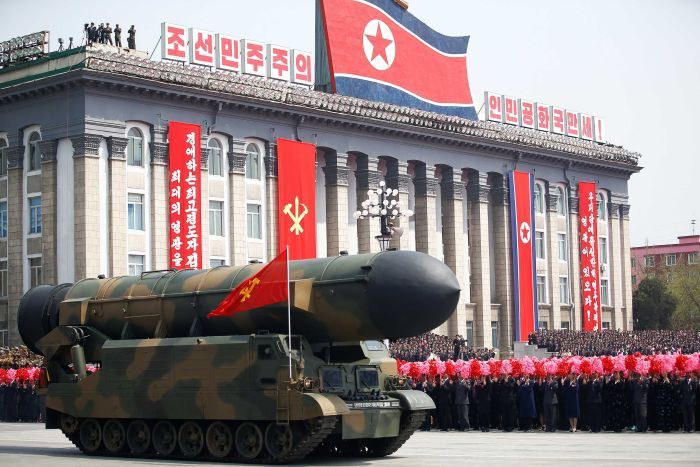
#3 is also essentially off the table. We have tried under the past three presidential administrations (both Democrat and Republican) to use various carrots and sticks to get the North Koreans to forgo their quest for nukes. None of this has worked, largely because there are no sanctions or offers of aid big enough to eclipse the value the Kim regime sees in having a working nuclear deterrent to the United States. Anything more aggressive than what we have tried threatens to run afoul of #1, which nobody wants. So while nobody in the US government can admit it out loud, we're essentially stuck with a nuclear-armed North Korea with a limited strike capability against the United States.
That leaves us with Goals 1 and 2. These are indeed achievable using the same tool we've been using in Korea and elsewhere for the past three generations: deterrence. A basic deterrence posture does, in a sense, look a little like what my friend suggested: "ignoring" North Korea. They have weapons, we have weapons, we each make it clear to the other under what circumstances we will use them, and then we settle down and watch nothing happen. The Kim regime wants to deter an attack on its regime; we want to deter an attack on South Korea, Japan, and ourselves (the Chinese can take care of themselves). With both sides possessing a devastating strike capability, neither is likely to attack the other.
Of course, completely ignoring North Korea by having essentially no relationship isn't really an option. There is always a need for contact to avoid misunderstandings, to facilitate basic interactions, to jointly govern the DMZ, and so on. Most of the time this kind of contact takes place well below the public's radar screen. Banning Americans from traveling to NK will probably help keep it there.
The longer-term danger which we, Seoul, and Beijing all recognize is: what happens if the North Korean system collapses economically? An internal crisis would likely spark a mass exodus of refugees, some of whom would be shot while fleeing but many of whom would wash up on South Korean and Chinese shores. A serious crisis could also lead to internal unrest, especially if the North Korean military begins to doubt the wisdom of backing Kim's rule or, worse, factionalizes. There is no viable political infrastructure or civil society in North Korea, so any crisis could lead to chaos for a long time before order is restored. And given the level of weaponry in the hands of the North Korean military, that chaos could lead to a lot of damage, both inside the country and in its neighbors.
Unfortunately, neither engagement nor disengagement can have much effect on the North's internal dynamics. If we see a food crisis coming, we can flood the country with food aid, which staves off the crisis at the expense of propping up the Kim regime. We should certainly maintain enough engagement to be able to see what's happening - any warning at all that a crisis is brewing is better than none.
In the absence of a serious internal crisis, North Korea is a significant priority for US foreign policy but probably not a very active one. Beyond deterrence and some level of engagement (in which we may want to follow the lead of our South Korean allies, since they bear the immediate consequences), there's really not a lot to be done. Even the Trump administration seems to have figured out that, while it's easy to criticize your predecessors for "not doing enough" on North Korea, the reality is that we don't have any other options and we do what we do because there is nothing else to be done.
Interestingly, China more or less shares our goals with regard to North Korea. They don't want war, they don't want an attack on the US (which would cause a war), and they would probably prefer that North Korea not have nukes. To the extent that we want to find areas to cooperate with China, North Korea is a promising field. But we should not suffer from the illusion that China can force the Kim regime to do things that we can't. If China squeezes North Korea by cutting off trade, that could well precipitate the kind of internal crisis that no one wants. In essence, the Kim regime has at least two forms of deterrence: it can cause unacceptable damage with its military, and it can also cause unacceptable damage by its own untimely death. It's a modern state version of a dead man's switch.
The best we can hope for, therefore, is a North Korea that is stable (if poor and a human rights disaster) and contained. There is actually a fifth goal, which we and China also share: preventing North Korea from sharing its nuclear or missile technology with other actors elsewhere in the world. That's an area where we can fruitfully cooperate. Export proliferation is also not a big priority for the Kim government, which cares for its own survival and not at all for anyone else in the world.
So the answer to the question of whether we can ignore North Korea is "yes, sort of". Energetic and engaged diplomacy is unlikely to change the Kim regime's behavior. Starving it (beyond the current levels of sanctions) could trigger a disaster. And so we sit, and wait, and hope to contain the damage when change eventually comes.
OK, honest question for the many people in my feed who are smarter about international stuff than I am.
Hypothetically, what if the US were to just ignore North Korea? No threatening, no assisting, no engaging, nothing? Just maintain our relationship with South Korea and nothing else?
Would that still create an unacceptable risk for South Korea? Would it destabilize our relationship with China?
There are obvious humanitarian reasons not to follow this course, so I'm not advocating anything -- I just want to better understand how the cogs fit together. Smart people, please educate me.
Like all questions of foreign policy, answering this one depends very much on what your goals are. The Trump administration hasn't been very clear in articulating its goals towards North Korea, but my sense is that they haven't shifted very much from where past administrations have been. Those goals reasonably include, or could include, the following:
1) Avoid war in the Korean peninsula (which would be horrendously catastrophic for everybody, and would result in millions of deaths).
2) Prevent North Korea from attacking the United States with a nuclear weapon.
3) Prevent North Korea from developing a deployable nuclear weapon. Barring this, prevent it from developing such a weapon that can be delivered to the United States.
4) Bring about regime change in North Korea, with a possible eye towards reunifying the peninsula.
#4 is, for all intents and purposes, out of bounds. The Kim regime in Pyongyang desires its survival in power above all else, and it has had a credible conventional deterrent against Seoul and South Korea for decades. We may say we don't like their government very much, but no US administration has openly flirted with actively trying to change it - as Secretary of State Rex Tillerson reinforced just yesterday.
#3 is also essentially off the table. We have tried under the past three presidential administrations (both Democrat and Republican) to use various carrots and sticks to get the North Koreans to forgo their quest for nukes. None of this has worked, largely because there are no sanctions or offers of aid big enough to eclipse the value the Kim regime sees in having a working nuclear deterrent to the United States. Anything more aggressive than what we have tried threatens to run afoul of #1, which nobody wants. So while nobody in the US government can admit it out loud, we're essentially stuck with a nuclear-armed North Korea with a limited strike capability against the United States.
That leaves us with Goals 1 and 2. These are indeed achievable using the same tool we've been using in Korea and elsewhere for the past three generations: deterrence. A basic deterrence posture does, in a sense, look a little like what my friend suggested: "ignoring" North Korea. They have weapons, we have weapons, we each make it clear to the other under what circumstances we will use them, and then we settle down and watch nothing happen. The Kim regime wants to deter an attack on its regime; we want to deter an attack on South Korea, Japan, and ourselves (the Chinese can take care of themselves). With both sides possessing a devastating strike capability, neither is likely to attack the other.
Of course, completely ignoring North Korea by having essentially no relationship isn't really an option. There is always a need for contact to avoid misunderstandings, to facilitate basic interactions, to jointly govern the DMZ, and so on. Most of the time this kind of contact takes place well below the public's radar screen. Banning Americans from traveling to NK will probably help keep it there.
The longer-term danger which we, Seoul, and Beijing all recognize is: what happens if the North Korean system collapses economically? An internal crisis would likely spark a mass exodus of refugees, some of whom would be shot while fleeing but many of whom would wash up on South Korean and Chinese shores. A serious crisis could also lead to internal unrest, especially if the North Korean military begins to doubt the wisdom of backing Kim's rule or, worse, factionalizes. There is no viable political infrastructure or civil society in North Korea, so any crisis could lead to chaos for a long time before order is restored. And given the level of weaponry in the hands of the North Korean military, that chaos could lead to a lot of damage, both inside the country and in its neighbors.
Unfortunately, neither engagement nor disengagement can have much effect on the North's internal dynamics. If we see a food crisis coming, we can flood the country with food aid, which staves off the crisis at the expense of propping up the Kim regime. We should certainly maintain enough engagement to be able to see what's happening - any warning at all that a crisis is brewing is better than none.
In the absence of a serious internal crisis, North Korea is a significant priority for US foreign policy but probably not a very active one. Beyond deterrence and some level of engagement (in which we may want to follow the lead of our South Korean allies, since they bear the immediate consequences), there's really not a lot to be done. Even the Trump administration seems to have figured out that, while it's easy to criticize your predecessors for "not doing enough" on North Korea, the reality is that we don't have any other options and we do what we do because there is nothing else to be done.
Interestingly, China more or less shares our goals with regard to North Korea. They don't want war, they don't want an attack on the US (which would cause a war), and they would probably prefer that North Korea not have nukes. To the extent that we want to find areas to cooperate with China, North Korea is a promising field. But we should not suffer from the illusion that China can force the Kim regime to do things that we can't. If China squeezes North Korea by cutting off trade, that could well precipitate the kind of internal crisis that no one wants. In essence, the Kim regime has at least two forms of deterrence: it can cause unacceptable damage with its military, and it can also cause unacceptable damage by its own untimely death. It's a modern state version of a dead man's switch.
The best we can hope for, therefore, is a North Korea that is stable (if poor and a human rights disaster) and contained. There is actually a fifth goal, which we and China also share: preventing North Korea from sharing its nuclear or missile technology with other actors elsewhere in the world. That's an area where we can fruitfully cooperate. Export proliferation is also not a big priority for the Kim government, which cares for its own survival and not at all for anyone else in the world.
So the answer to the question of whether we can ignore North Korea is "yes, sort of". Energetic and engaged diplomacy is unlikely to change the Kim regime's behavior. Starving it (beyond the current levels of sanctions) could trigger a disaster. And so we sit, and wait, and hope to contain the damage when change eventually comes.
Subscribe to:
Posts (Atom)