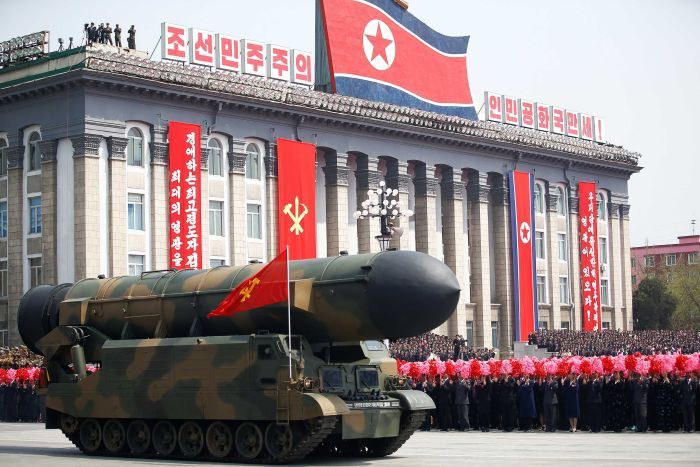
We will find out later today whether the Trump Administration wants to continue to abide by the multilateral agreement limiting Iran's development of nuclear technology. All public indications are that Trump will renege on the deal, although predictability has never been this Administration's hallmark. As Trump himself would say, "we'll see what happens".
Assuming that Trump follows through on his threat and withdraws the US from the arrangement, this will signal a major blow to those who believe that US foreign policy can be understood as an exercise in rational choice. There is no way to square this decision with anything resembling rationality as it is commonly understood.
Rational choice involves a few simple steps. It's easy to understand, though incredibly difficult to practice:
1) Set goals, in priority order
2) Evaluate a range of options (preferably, all available options) in terms of:
a) Their probability of achieving the goals
b) Their likely costs
3) Select the option that maximizes gains and minimizes costs
Let's assume in this case that the US goal is to prevent Iran from developing nuclear weapons. This is the stated goal not only of the Trump Administration, but every administration before it. If there is one common element to US policy, this would be it.
The multilateral nuclear agreement is one way of achieving this goal. It has relatively low cost (2), and by all objective accounts it has a reasonably high prospect of success for the time being (1). We can argue about the probability of the latter, but it's somewhere above zero and somewhere below 1.0.
What are the alternatives? This Administration has offered few other options. Two possibilities come to mind:
• Renewed sanctions: The cost to the US of such sanctions is relatively low (2), but the probability of success is also low (1), certainly lower than the existing arrangement. Abandoning the deal means abandoning the constraints in it and the inspections that come with the package, which arms control experts have described as the most intrusive inspections regime ever devised. Israel recently revealed that Iran did in fact develop a program for nuclearization some 15 years ago - during a period of sanctions. Renewed sanctions will do nothing to prevent Iran from developing nukes, and will likely given them every incentive to do so if they think sanctions are a prelude to the next option...
• War: The cost to the US (and participating allies) of a war with Iran is catastrophically high (2). Such a war would almost immediately close the Strait of Hormuz, skyrocketing global oil prices and potentially sending the US economy back into recession. The immediate monetary and human cost to the US military would also be high. Iran is not Iraq - it is large, mountainous, and populated by a fiercely nationalistic people numbering in the tens of millions. The nuclear facilities we would most want to destroy are buried deep under mountains. Airstrikes or missile strikes won't work, and invasion is suicide. The human toll of such a campaign would be catastrophic. Moreover, the odds of such a campaign successfully denuclearizing Iran are extremely low (1), because of the aforementioned mountain bunkers and because in the long run, Iranians will have every reason to want to develop a deterrent to prevent another attack.
Few if any have argued that the current negotiated deal is perfect, and it doesn't address other kinds of behavior (missile development, support for Syria and Hizbollah) that the US would rather Iran didn't engage in. But there are no perfect solutions - there aren't even many good ones. If these are the options on the table, then abandoning the existing arrangement in favor of either sanctions or war is, quite simply, irrational.
The alternative explanation, of course, is that preventing nuclear proliferation isn't really the goal - the goal is regime change in Iran. That does indeed change the calculus, because the existing negotiated arrangement has a zero probability of achieving that goal. Sanctions likewise won't topple the regime, especially as they will be unilateral on the part of the US - Europe, China, and Russia won't join in, so their impact will be low on Iran. The only possible avenue that leads to regime change is war - and even that has a low probability of success, if you define success as "overthrow the existing regime and replace it with one consistent with US interests". If we learned anything from Iraq, it is that our ability to control what happens politically inside a country after we knock over its government is close to zero.
Very few, of course, have accused Trump himself or his administration of acting in a rational fashion. This is a Presidency driven by gut feelings, fear, and the desire to be the anti-Obama. Those things do help explain a decision to abandon the Iranian nuclear settlement. Let's just stop pretending that rationality can explain any of this.
Showing posts with label War. Show all posts
Tuesday, May 8, 2018
Monday, April 16, 2018
A Syrian Escalation Ladder?
Amidst the long run-up to last week's somewhat anti-climactic missile strikes against Syria, a few folks raised a concerning specter: could a US bombing campaign lead American into a wider war?
For all the talk of a "new Cold War" between the US and Russia, we're nowhere near that point. The Syria case illustrates this nicely, and helps understand why Syria is unlikely to be the flashpoint for World War III.
First, even with the end of the Cold War in 1991 the United States and Russia remain strategic nuclear-capable states, meaning that each possesses the capability to threaten the existence of the other as a functioning society, and indeed to threaten life on the planet. Strategic nuclear arsenals have declined from their peak in the early 1980s, but both sides retain plenty of capacity to effectively annihilate the other.
What has changed since the Cold War is that the US and Russia no longer seek to actively destroy or overthrow the other. Putin enjoys messing with the West, but largely because he wants to create some breathing space within what he regards as Russia's sphere of influence so he can do what he wants. Today's Russia, unlike Stalin's USSR, has no grand ideology for taking over the world. Putin may be a local megalomaniac, but a global megalomaniac he is not.
Because of this shift, the US is no longer nearly as concerned as we once were that Moscow could try to destroy us at any moment. This used to be a real, if debated, concern, but there is no equivalent to the Committee on the Present Danger today - no more talk of Nuclear Vulnerability Windows and Strategic First Strike capabilities and the other sorts of things we used to worry about.
All of this is to say that, compared to the 1970s and early 1980s, the global superpower stakes are a LOT lower. If anybody wants to replace the US as global hegemon, it's China, and they seem content to focus on economics as a tool for doing so. They also have the good sense to stay the heck out of Syria, and indeed the Middle East as a whole.
So what does all of this mean for the US involvement in Syria? In the short term, we got through the strikes over the weekend without any obvious escalation. Trump, despite his proclaimed aversion to telling people what he's going to do, had telegraphed the attack for a week, so everyone had time to prepare. The US military also had plenty of opportunity to warn the Russians, who do have personnel and equipment on the ground in Syria. That warning was undoubtedly passed on to the Syrian regime, possibly lessening the impact of the strikes, but the whole thing was mostly symbolic anyway.
The fact that the US military can warn the Russian military directly in a theater of operations shows how far the two sides have gone to avoid direct confrontation, which neither of them wants. Syria isn't important enough to either side to consider risking a broader crisis, and unlike the Cold War era there's no "domino theory" today that would link a conflict in a minor regional state to an existential threat to the US.
There are only two things the US can do in Syria that could provoke a significant Russian military response. The first is to kill actual Russian soldiers (not mercenaries, whom all sides agree are on their own - the whole point of those forces, on both sides, is plausible deniability). If the US were to target a Russian facility and kill uniformed Russian forces, particularly in significant numbers, Russia would almost certainly feel compelled to respond in some way. Ongoing communication between US and Russian commanders in the area is a way to keep this from happening by accident, which so far has worked well.
The other thing that could produce a significant Russian reaction would be to directly threaten the survival of the Assad regime. Were to US to launch a truly massive bombing campaign, possibly combined with ground forces, that threatened to overthrow Assad and replace him with a more pro-Western alternative, we would be forcing Russia to make a choice: risk war with the US in order to protect their ally, or abandon their alliance and retreat. That's a difficult choice, given all that Russia has invested in the Syrian regime.
Luckily, it's a choice that Russia will almost certainly never have to make. Current US foreign policy, taken collectively, doesn't care nearly enough about Syria to try to alter the outcome of the Syrian civil war. Trump himself dislikes the whole thing and, now that ISIS is mostly defeated, wants to get the heck out. Others in the administration may have other views, but together they haven't been able to come up with a coherent Syria policy. In the absence of consensus on Syria, and given Trump's indifference to its future, it is extremely unlikely that the US will do anything that might push the situation towards a Russian response.
So much, then, for starting World War III. The other escalation axis people have been watching is Israel-Iran, but this too probably isn't going anywhere. Iran's support for Syria, while significant, is mostly through weapons and money, not Iranian forces on the ground. Iran doesn't like it when Israel bombs things in Syria, but there's not much the Iranians can do about it. Iran lacks a counter-deterrent to Israel's nuclear arsenal, and it lacks any other significant capacity to strike Israel except through terrorist proxies. As many scholars in my field have pointed out, proximity is a major factor in the likelihood of war, and Israel and Iran are not near each other.
Syria is a good example of how the most powerful state in the system doesn't always get its way. In this case that's because the US, despite its significant military advantages over all competitors, doesn't care as much as others do about the outcome. The American body politic is extremely unwilling to suffer any serious costs over Syria - Trump may be able to shoot someone on 5th Avenue and not lose voters but if he gets a couple thousand Americans killed fighting in Syria he may see his support cut in half. There's no agreement in Washington among foreign policy elites (of any party) as to what to do either. And so we dither and muddle along, while those with clearer goals and greater commitment forge ahead.
This is unlikely to change any time soon, and the end result is likely Assad remaining in charge of a significantly damaged Syria. On the way to that outcome, we can at least rest assured that this war is unlikely to spiral outward into a wider one.
For all the talk of a "new Cold War" between the US and Russia, we're nowhere near that point. The Syria case illustrates this nicely, and helps understand why Syria is unlikely to be the flashpoint for World War III.
First, even with the end of the Cold War in 1991 the United States and Russia remain strategic nuclear-capable states, meaning that each possesses the capability to threaten the existence of the other as a functioning society, and indeed to threaten life on the planet. Strategic nuclear arsenals have declined from their peak in the early 1980s, but both sides retain plenty of capacity to effectively annihilate the other.
What has changed since the Cold War is that the US and Russia no longer seek to actively destroy or overthrow the other. Putin enjoys messing with the West, but largely because he wants to create some breathing space within what he regards as Russia's sphere of influence so he can do what he wants. Today's Russia, unlike Stalin's USSR, has no grand ideology for taking over the world. Putin may be a local megalomaniac, but a global megalomaniac he is not.
Because of this shift, the US is no longer nearly as concerned as we once were that Moscow could try to destroy us at any moment. This used to be a real, if debated, concern, but there is no equivalent to the Committee on the Present Danger today - no more talk of Nuclear Vulnerability Windows and Strategic First Strike capabilities and the other sorts of things we used to worry about.
All of this is to say that, compared to the 1970s and early 1980s, the global superpower stakes are a LOT lower. If anybody wants to replace the US as global hegemon, it's China, and they seem content to focus on economics as a tool for doing so. They also have the good sense to stay the heck out of Syria, and indeed the Middle East as a whole.
So what does all of this mean for the US involvement in Syria? In the short term, we got through the strikes over the weekend without any obvious escalation. Trump, despite his proclaimed aversion to telling people what he's going to do, had telegraphed the attack for a week, so everyone had time to prepare. The US military also had plenty of opportunity to warn the Russians, who do have personnel and equipment on the ground in Syria. That warning was undoubtedly passed on to the Syrian regime, possibly lessening the impact of the strikes, but the whole thing was mostly symbolic anyway.
The fact that the US military can warn the Russian military directly in a theater of operations shows how far the two sides have gone to avoid direct confrontation, which neither of them wants. Syria isn't important enough to either side to consider risking a broader crisis, and unlike the Cold War era there's no "domino theory" today that would link a conflict in a minor regional state to an existential threat to the US.
There are only two things the US can do in Syria that could provoke a significant Russian military response. The first is to kill actual Russian soldiers (not mercenaries, whom all sides agree are on their own - the whole point of those forces, on both sides, is plausible deniability). If the US were to target a Russian facility and kill uniformed Russian forces, particularly in significant numbers, Russia would almost certainly feel compelled to respond in some way. Ongoing communication between US and Russian commanders in the area is a way to keep this from happening by accident, which so far has worked well.
The other thing that could produce a significant Russian reaction would be to directly threaten the survival of the Assad regime. Were to US to launch a truly massive bombing campaign, possibly combined with ground forces, that threatened to overthrow Assad and replace him with a more pro-Western alternative, we would be forcing Russia to make a choice: risk war with the US in order to protect their ally, or abandon their alliance and retreat. That's a difficult choice, given all that Russia has invested in the Syrian regime.
Luckily, it's a choice that Russia will almost certainly never have to make. Current US foreign policy, taken collectively, doesn't care nearly enough about Syria to try to alter the outcome of the Syrian civil war. Trump himself dislikes the whole thing and, now that ISIS is mostly defeated, wants to get the heck out. Others in the administration may have other views, but together they haven't been able to come up with a coherent Syria policy. In the absence of consensus on Syria, and given Trump's indifference to its future, it is extremely unlikely that the US will do anything that might push the situation towards a Russian response.
So much, then, for starting World War III. The other escalation axis people have been watching is Israel-Iran, but this too probably isn't going anywhere. Iran's support for Syria, while significant, is mostly through weapons and money, not Iranian forces on the ground. Iran doesn't like it when Israel bombs things in Syria, but there's not much the Iranians can do about it. Iran lacks a counter-deterrent to Israel's nuclear arsenal, and it lacks any other significant capacity to strike Israel except through terrorist proxies. As many scholars in my field have pointed out, proximity is a major factor in the likelihood of war, and Israel and Iran are not near each other.
Syria is a good example of how the most powerful state in the system doesn't always get its way. In this case that's because the US, despite its significant military advantages over all competitors, doesn't care as much as others do about the outcome. The American body politic is extremely unwilling to suffer any serious costs over Syria - Trump may be able to shoot someone on 5th Avenue and not lose voters but if he gets a couple thousand Americans killed fighting in Syria he may see his support cut in half. There's no agreement in Washington among foreign policy elites (of any party) as to what to do either. And so we dither and muddle along, while those with clearer goals and greater commitment forge ahead.
This is unlikely to change any time soon, and the end result is likely Assad remaining in charge of a significantly damaged Syria. On the way to that outcome, we can at least rest assured that this war is unlikely to spiral outward into a wider one.
Thursday, April 12, 2018
Laws, Norms, and War: We Have Met the Enemy (again)...
As President Trump continues to flirt with the idea of hitting Syria with missiles, some in Washington have started asking whether the President has the legal authority to do so. This question makes little sense to most Americans, who have long assumed that Presidents (whom we refer to as "Commander-in-Chief" more often than by any other title) can do whatever the heck they want with the US military.
But the question does bear consideration. Lame-duck Speaker Paul Ryan opined today that the President doesn't need any legal authority beyond the Authorization to Use Military Force (AUMF) passed by Congress in the wake of 9/11. Others have pointed out that that particular AUMF is a little long in the tooth (nearly 17 years), and it's stretching the original meaning well past any reasonable interpretation of the original intent to suggest that an authorization to go after al Qaeda and its affiliates somehow covers military strikes on the Syrian government, which hates AQ and its ilk.
The Framers of the Constitution never intended the President to be the one to decide whether the US goes to war. The power to declare war is listed under the Enumerated Powers of Congress (Article I, Section 8). That same section also gives Congress the power to create (or not) an Army and a Navy. For all that conservatives in the vein of the late Antonin Scalia like to talk about the Doctrine of Original Intent, none have ever felt any qualms about the complete abandonment of the obvious intent of the Framers on this issue.
That being said, here we are. The US Congress has not declared war since December 1941, and appears unlikely ever to do so again, even though the United States has been involved (often heavily involved) in a great many wars since the end of WWII. Sometimes, in a salve to the Constitution, they pass an AUMF as a way of saying, "See! We still have a say!" But often, even that doesn't happen.
My friend Vaughn Shannon pointed out recently that, while President Obama came under a lot of criticism for not striking Syria militarily back in 2013 when the question of chemical weapons first came up, this is not nearly the whole story. President Obama believed that, in order to strike a sovereign government in Syria, he would need (at minimum) authorization from Congress. That Congress, controlled by Republicans disinclined to given Obama anything that might benefit him politically and still stinging from the Iraq debacle, declined. Under the rules as he understood them, therefore, President Obama could not strike Syria. The fault was not his, it was Congress'.
All of this is to say nothing, of course, of international law. The UN Charter expressly forbids an attack on a sovereign member state except in self-defense or under the authorization of the Security Council. Most Americans have long since forgotten that the United States wrote those rules, though we have long ignored them. (Bonus points for anyone who can name the two incidents in history where the UNSC actually did authorize war.)
Usually, the way to settle questions of law is to go to court. But US courts have long declared that they have no intention of touching this question with a 10-foot pole, so there's no help there.
Congress, of course, only exercises the war power when they feel like it politically, and when the President feels like asking them to. This has devolved into a situation where the President is given broad leeway, and where people support or oppose acts of war based on which party they belong to. So much for politics ending at the water's edge...
How did we get here? Like a great many bad decisions, the roots lie in fear. After the Cold War, we very quickly became afraid of a resurgent Soviet Union and the global Communist menace. In that fear, we allowed successive Presidents to commit US forces to various and sundry military adventures, including the Vietnam debacle now memorialized by over 50,000 names carved in black stone in Washington.
The problem with using law as a guide to the US' use of force is that the law must be interpreted first. As another friend of mine, Steve Saideman, pointed out recently, everyone in Washington has their own lawyers. The White House has lawyers, the Pentagon has lawyers (both in the Office of the Secretary of Defense and in the Joint Staff, which serves the military side), the State Department has lawyers, Congress has lawyers. Lawyers generally come up with arguments explaining how whatever their masters want is on the right side of the law - witness the infamous "torture memos" drawn up in the George W. Bush administration by John Yoo and his colleagues.
So the original question - does the President have the authority to launch strikes on Syria - isn't actually a legal question at all. It's a political question. And how we answer it turns very much on how we understand both the rules supposedly enshrined in law, as well as the norms underlying those rules.
In general, laws only function when people accept their legitimacy - that is, when they buy into behavioral norms that underpin the laws. Take those norms away, and the law becomes merely a rhetorical device, a talking point for pundits to argue about. The very idea of being a "nation of laws" rests on our willingness to actually behave as if the laws matter more than what we happen to want to do at any one moment.
As Steve Saideman and others have pointed out, this is where the Trump Administration has done perhaps more damage than in any other area. Norms have been eroding for years, of course, and any reference to a "golden age" of norms in the past is probably mythical. But Trump, who more than any other President is the embodiment of his own administration, actively rejects all norms. He doesn't think they exist, or if they do they only exist for suckers and losers. He believes himself to be unconstrained by any rules - laws, norms, social understandings of shame, you name it.
And so in the coming days, the Trump Administration may attack Syria with missiles or bombs. Such an attack will likely accomplish nothing, as I have argued elsewhere. But as it will come with neither blessing from the UN nor authorization from Congress, it will be one more erosion of the norms that once governed US military force, however imperfectly. In so doing, we model the behavior that the rest of the world will emulate. We are creating the world we claim we don't want, and then blaming everyone else for it. Perhaps we, like our President, need to grow up and face the world like adults.
But the question does bear consideration. Lame-duck Speaker Paul Ryan opined today that the President doesn't need any legal authority beyond the Authorization to Use Military Force (AUMF) passed by Congress in the wake of 9/11. Others have pointed out that that particular AUMF is a little long in the tooth (nearly 17 years), and it's stretching the original meaning well past any reasonable interpretation of the original intent to suggest that an authorization to go after al Qaeda and its affiliates somehow covers military strikes on the Syrian government, which hates AQ and its ilk.
The Framers of the Constitution never intended the President to be the one to decide whether the US goes to war. The power to declare war is listed under the Enumerated Powers of Congress (Article I, Section 8). That same section also gives Congress the power to create (or not) an Army and a Navy. For all that conservatives in the vein of the late Antonin Scalia like to talk about the Doctrine of Original Intent, none have ever felt any qualms about the complete abandonment of the obvious intent of the Framers on this issue.
That being said, here we are. The US Congress has not declared war since December 1941, and appears unlikely ever to do so again, even though the United States has been involved (often heavily involved) in a great many wars since the end of WWII. Sometimes, in a salve to the Constitution, they pass an AUMF as a way of saying, "See! We still have a say!" But often, even that doesn't happen.
My friend Vaughn Shannon pointed out recently that, while President Obama came under a lot of criticism for not striking Syria militarily back in 2013 when the question of chemical weapons first came up, this is not nearly the whole story. President Obama believed that, in order to strike a sovereign government in Syria, he would need (at minimum) authorization from Congress. That Congress, controlled by Republicans disinclined to given Obama anything that might benefit him politically and still stinging from the Iraq debacle, declined. Under the rules as he understood them, therefore, President Obama could not strike Syria. The fault was not his, it was Congress'.
All of this is to say nothing, of course, of international law. The UN Charter expressly forbids an attack on a sovereign member state except in self-defense or under the authorization of the Security Council. Most Americans have long since forgotten that the United States wrote those rules, though we have long ignored them. (Bonus points for anyone who can name the two incidents in history where the UNSC actually did authorize war.)
Usually, the way to settle questions of law is to go to court. But US courts have long declared that they have no intention of touching this question with a 10-foot pole, so there's no help there.
Congress, of course, only exercises the war power when they feel like it politically, and when the President feels like asking them to. This has devolved into a situation where the President is given broad leeway, and where people support or oppose acts of war based on which party they belong to. So much for politics ending at the water's edge...
How did we get here? Like a great many bad decisions, the roots lie in fear. After the Cold War, we very quickly became afraid of a resurgent Soviet Union and the global Communist menace. In that fear, we allowed successive Presidents to commit US forces to various and sundry military adventures, including the Vietnam debacle now memorialized by over 50,000 names carved in black stone in Washington.
The problem with using law as a guide to the US' use of force is that the law must be interpreted first. As another friend of mine, Steve Saideman, pointed out recently, everyone in Washington has their own lawyers. The White House has lawyers, the Pentagon has lawyers (both in the Office of the Secretary of Defense and in the Joint Staff, which serves the military side), the State Department has lawyers, Congress has lawyers. Lawyers generally come up with arguments explaining how whatever their masters want is on the right side of the law - witness the infamous "torture memos" drawn up in the George W. Bush administration by John Yoo and his colleagues.
So the original question - does the President have the authority to launch strikes on Syria - isn't actually a legal question at all. It's a political question. And how we answer it turns very much on how we understand both the rules supposedly enshrined in law, as well as the norms underlying those rules.
In general, laws only function when people accept their legitimacy - that is, when they buy into behavioral norms that underpin the laws. Take those norms away, and the law becomes merely a rhetorical device, a talking point for pundits to argue about. The very idea of being a "nation of laws" rests on our willingness to actually behave as if the laws matter more than what we happen to want to do at any one moment.
As Steve Saideman and others have pointed out, this is where the Trump Administration has done perhaps more damage than in any other area. Norms have been eroding for years, of course, and any reference to a "golden age" of norms in the past is probably mythical. But Trump, who more than any other President is the embodiment of his own administration, actively rejects all norms. He doesn't think they exist, or if they do they only exist for suckers and losers. He believes himself to be unconstrained by any rules - laws, norms, social understandings of shame, you name it.
And so in the coming days, the Trump Administration may attack Syria with missiles or bombs. Such an attack will likely accomplish nothing, as I have argued elsewhere. But as it will come with neither blessing from the UN nor authorization from Congress, it will be one more erosion of the norms that once governed US military force, however imperfectly. In so doing, we model the behavior that the rest of the world will emulate. We are creating the world we claim we don't want, and then blaming everyone else for it. Perhaps we, like our President, need to grow up and face the world like adults.
Monday, April 9, 2018
Syria and Deterrence: A Depressing Primer
So here we are again. The Syrian regime has once again used chemical weapons against civilians, and the US is again faced with the decision of what to do about it. Same old, same old.
First, to give the current administration its due: complaints about the deal reached during the Obama administration to supposedly rid Syria of its chemical weapons are legit. That deal obviously didn't work, and I suspect that most of those involved in negotiating it at the time knew it wouldn't. Without verifiability and serious Russian backing, there was no way Syria would disarm. There was obviously no penalty for Assad to cheat, and so he cheated.
That said, whining about the past isn't a foreign policy. Trump owns this problem now, just as he owned it a year ago. Last year, faced with the same situation, he lambasted Obama's foreign policy and then proceeded to lob a few missiles at Syria. He declared victory and called it a day.
And here we are again.
To be clear, there are indications from those who know the situation that this recent attack is not an isolated incident. Syria has been using chemicals a lot. It just doesn't make the news very often, probably because most of the country is unreachable by outside media - it's just too dangerous, and Assad's forces aren't interested in press coverage of their war.
If this is the case, then the Trump administration's attempts to deter further chemical weapons use by the Assad government have failed. That certainly seems to be the case with this latest attack, even if we accept former Ambassador Ford's contention that this incident is unrelated to Trump's comment last week that he wants to get out of Syria.
The failure of US deterrence efforts was easy to foresee. Deterrence is remarkably straightforward, and rests on imposing costs significant enough to override all other concerns (cognitive or affective). For all that I tend to see emotion as the primary motivating factor much of the time, there are times when facts impose their will on the situation.
The basic deterrence equation is simple. I declare the behavior that I want my opponent to not do. In this case, the US government wants Syria to not use chemical weapons. This had been a fairly robust international norm in general, but we can see that norms alone don't influence Syrian behavior.
Once I've made it clear what I don't want you to do, I then issue a threat: if you do that thing, I will inflict punishment on you. That punishment has to have at least two characteristics to work:
1) It has to be sufficiently severe that it overshadows the gains you might get from doing the thing I want you not to do.
2) You have to believe that I will actually carry out the threat - that punishment is certain if you cross the line.
The Trump administration's deterrence efforts have failed on both counts. Previous rounds of military strikes have been relatively mild, a small price to pay if Assad thinks that chemical weapons use will help him win his long-running civil war. And we haven't been consistent in applying those punishments. If the Syrian regime thinks there's a chance it won't get punished at all (based on past experience), that increases the chances they'll cross the line again.
At this point, a year into the Trump Presidency, he's dug himself a pretty serious hole in terms of deterring Assad. The only way to get out of that hole would be to reestablish both of the criteria above, swiftly and decisively and above all consistently over time.
In practice, this would mean a sustained campaign of airstrikes against a wide range of Syrian targets, sufficient in both quantity and importance that they threaten Syria's increasingly-certain victory in its internal war. Assad is willing to trade punishment in exchange for victory - in order for a punishment to be strong enough (condition 1), it needs to put that victory in doubt. And in order for him to change his belief that he can just wait it out (condition 2), such strikes would have to be carried out over a long period of time, for months not weeks or days.
It's not clear that the US government (Trump's emotional volatility aside) has the stomach for such an undertaking. It would be enormously expensive, even if (or especially if) we keep pilots out of harm's way by using cruise missiles and other strike-at-a-distance technologies. Deploying the forces necessary would put a strain on US military efforts elsewhere (Korea, anyone?) Innocent civilians will die, which will create international pressure to cease and desist. And Russia, of course, will object, and may engage in further bad behavior aimed at us or our interests.
So Trump will bluster, as he always does. There may well be some limited strikes, which Trump will praise as the "big price to pay" that he promised. Assad will quit with the chemicals for a few weeks, and everyone will forget about it. Then he'll go back to doing what he wants.
This is lousy foreign policy, not least because it makes the United States look like a paper tiger. But bluster and Twitter rants aside, it's not clear that there are any good options here. A Hillary Clinton administration would likely be stuck in the same situation, with the same lousy choices and the same calculations. The Obama administration did face this same situation, tried things a different way, and failed, just as Trump is failing now.
In addition to the tragedy within Syria (which is horrific for the Syrian people caught in the fighting), the longer-range problem is that Syria, with active Russian and Iranian backing, is largely dismantling the international norm against chemical weapons that we spent decades constructing during the Cold War. It's not clear that there has ever been a point, post-1991, where the United States could have stopped that erosion, or what exactly we would have done to change that path. But it does mean that future use of chemical weapons is more likely by the day, and that future efforts to deter that use will be even less effective than they are now.
First, to give the current administration its due: complaints about the deal reached during the Obama administration to supposedly rid Syria of its chemical weapons are legit. That deal obviously didn't work, and I suspect that most of those involved in negotiating it at the time knew it wouldn't. Without verifiability and serious Russian backing, there was no way Syria would disarm. There was obviously no penalty for Assad to cheat, and so he cheated.
That said, whining about the past isn't a foreign policy. Trump owns this problem now, just as he owned it a year ago. Last year, faced with the same situation, he lambasted Obama's foreign policy and then proceeded to lob a few missiles at Syria. He declared victory and called it a day.
And here we are again.
To be clear, there are indications from those who know the situation that this recent attack is not an isolated incident. Syria has been using chemicals a lot. It just doesn't make the news very often, probably because most of the country is unreachable by outside media - it's just too dangerous, and Assad's forces aren't interested in press coverage of their war.
If this is the case, then the Trump administration's attempts to deter further chemical weapons use by the Assad government have failed. That certainly seems to be the case with this latest attack, even if we accept former Ambassador Ford's contention that this incident is unrelated to Trump's comment last week that he wants to get out of Syria.
The failure of US deterrence efforts was easy to foresee. Deterrence is remarkably straightforward, and rests on imposing costs significant enough to override all other concerns (cognitive or affective). For all that I tend to see emotion as the primary motivating factor much of the time, there are times when facts impose their will on the situation.
The basic deterrence equation is simple. I declare the behavior that I want my opponent to not do. In this case, the US government wants Syria to not use chemical weapons. This had been a fairly robust international norm in general, but we can see that norms alone don't influence Syrian behavior.
Once I've made it clear what I don't want you to do, I then issue a threat: if you do that thing, I will inflict punishment on you. That punishment has to have at least two characteristics to work:
1) It has to be sufficiently severe that it overshadows the gains you might get from doing the thing I want you not to do.
2) You have to believe that I will actually carry out the threat - that punishment is certain if you cross the line.
The Trump administration's deterrence efforts have failed on both counts. Previous rounds of military strikes have been relatively mild, a small price to pay if Assad thinks that chemical weapons use will help him win his long-running civil war. And we haven't been consistent in applying those punishments. If the Syrian regime thinks there's a chance it won't get punished at all (based on past experience), that increases the chances they'll cross the line again.
At this point, a year into the Trump Presidency, he's dug himself a pretty serious hole in terms of deterring Assad. The only way to get out of that hole would be to reestablish both of the criteria above, swiftly and decisively and above all consistently over time.
In practice, this would mean a sustained campaign of airstrikes against a wide range of Syrian targets, sufficient in both quantity and importance that they threaten Syria's increasingly-certain victory in its internal war. Assad is willing to trade punishment in exchange for victory - in order for a punishment to be strong enough (condition 1), it needs to put that victory in doubt. And in order for him to change his belief that he can just wait it out (condition 2), such strikes would have to be carried out over a long period of time, for months not weeks or days.
It's not clear that the US government (Trump's emotional volatility aside) has the stomach for such an undertaking. It would be enormously expensive, even if (or especially if) we keep pilots out of harm's way by using cruise missiles and other strike-at-a-distance technologies. Deploying the forces necessary would put a strain on US military efforts elsewhere (Korea, anyone?) Innocent civilians will die, which will create international pressure to cease and desist. And Russia, of course, will object, and may engage in further bad behavior aimed at us or our interests.
So Trump will bluster, as he always does. There may well be some limited strikes, which Trump will praise as the "big price to pay" that he promised. Assad will quit with the chemicals for a few weeks, and everyone will forget about it. Then he'll go back to doing what he wants.
This is lousy foreign policy, not least because it makes the United States look like a paper tiger. But bluster and Twitter rants aside, it's not clear that there are any good options here. A Hillary Clinton administration would likely be stuck in the same situation, with the same lousy choices and the same calculations. The Obama administration did face this same situation, tried things a different way, and failed, just as Trump is failing now.
In addition to the tragedy within Syria (which is horrific for the Syrian people caught in the fighting), the longer-range problem is that Syria, with active Russian and Iranian backing, is largely dismantling the international norm against chemical weapons that we spent decades constructing during the Cold War. It's not clear that there has ever been a point, post-1991, where the United States could have stopped that erosion, or what exactly we would have done to change that path. But it does mean that future use of chemical weapons is more likely by the day, and that future efforts to deter that use will be even less effective than they are now.
Wednesday, August 2, 2017
Can We Ignore North Korea?
A good friend of mine posted this question to FB today. Since a decent answer requires more than should be put into a FB comment section, I'm writing out my thoughts here.
OK, honest question for the many people in my feed who are smarter about international stuff than I am.
Hypothetically, what if the US were to just ignore North Korea? No threatening, no assisting, no engaging, nothing? Just maintain our relationship with South Korea and nothing else?
Would that still create an unacceptable risk for South Korea? Would it destabilize our relationship with China?
There are obvious humanitarian reasons not to follow this course, so I'm not advocating anything -- I just want to better understand how the cogs fit together. Smart people, please educate me.
Like all questions of foreign policy, answering this one depends very much on what your goals are. The Trump administration hasn't been very clear in articulating its goals towards North Korea, but my sense is that they haven't shifted very much from where past administrations have been. Those goals reasonably include, or could include, the following:
1) Avoid war in the Korean peninsula (which would be horrendously catastrophic for everybody, and would result in millions of deaths).
2) Prevent North Korea from attacking the United States with a nuclear weapon.
3) Prevent North Korea from developing a deployable nuclear weapon. Barring this, prevent it from developing such a weapon that can be delivered to the United States.
4) Bring about regime change in North Korea, with a possible eye towards reunifying the peninsula.
#4 is, for all intents and purposes, out of bounds. The Kim regime in Pyongyang desires its survival in power above all else, and it has had a credible conventional deterrent against Seoul and South Korea for decades. We may say we don't like their government very much, but no US administration has openly flirted with actively trying to change it - as Secretary of State Rex Tillerson reinforced just yesterday.
#3 is also essentially off the table. We have tried under the past three presidential administrations (both Democrat and Republican) to use various carrots and sticks to get the North Koreans to forgo their quest for nukes. None of this has worked, largely because there are no sanctions or offers of aid big enough to eclipse the value the Kim regime sees in having a working nuclear deterrent to the United States. Anything more aggressive than what we have tried threatens to run afoul of #1, which nobody wants. So while nobody in the US government can admit it out loud, we're essentially stuck with a nuclear-armed North Korea with a limited strike capability against the United States.
That leaves us with Goals 1 and 2. These are indeed achievable using the same tool we've been using in Korea and elsewhere for the past three generations: deterrence. A basic deterrence posture does, in a sense, look a little like what my friend suggested: "ignoring" North Korea. They have weapons, we have weapons, we each make it clear to the other under what circumstances we will use them, and then we settle down and watch nothing happen. The Kim regime wants to deter an attack on its regime; we want to deter an attack on South Korea, Japan, and ourselves (the Chinese can take care of themselves). With both sides possessing a devastating strike capability, neither is likely to attack the other.
Of course, completely ignoring North Korea by having essentially no relationship isn't really an option. There is always a need for contact to avoid misunderstandings, to facilitate basic interactions, to jointly govern the DMZ, and so on. Most of the time this kind of contact takes place well below the public's radar screen. Banning Americans from traveling to NK will probably help keep it there.
The longer-term danger which we, Seoul, and Beijing all recognize is: what happens if the North Korean system collapses economically? An internal crisis would likely spark a mass exodus of refugees, some of whom would be shot while fleeing but many of whom would wash up on South Korean and Chinese shores. A serious crisis could also lead to internal unrest, especially if the North Korean military begins to doubt the wisdom of backing Kim's rule or, worse, factionalizes. There is no viable political infrastructure or civil society in North Korea, so any crisis could lead to chaos for a long time before order is restored. And given the level of weaponry in the hands of the North Korean military, that chaos could lead to a lot of damage, both inside the country and in its neighbors.
Unfortunately, neither engagement nor disengagement can have much effect on the North's internal dynamics. If we see a food crisis coming, we can flood the country with food aid, which staves off the crisis at the expense of propping up the Kim regime. We should certainly maintain enough engagement to be able to see what's happening - any warning at all that a crisis is brewing is better than none.
In the absence of a serious internal crisis, North Korea is a significant priority for US foreign policy but probably not a very active one. Beyond deterrence and some level of engagement (in which we may want to follow the lead of our South Korean allies, since they bear the immediate consequences), there's really not a lot to be done. Even the Trump administration seems to have figured out that, while it's easy to criticize your predecessors for "not doing enough" on North Korea, the reality is that we don't have any other options and we do what we do because there is nothing else to be done.
Interestingly, China more or less shares our goals with regard to North Korea. They don't want war, they don't want an attack on the US (which would cause a war), and they would probably prefer that North Korea not have nukes. To the extent that we want to find areas to cooperate with China, North Korea is a promising field. But we should not suffer from the illusion that China can force the Kim regime to do things that we can't. If China squeezes North Korea by cutting off trade, that could well precipitate the kind of internal crisis that no one wants. In essence, the Kim regime has at least two forms of deterrence: it can cause unacceptable damage with its military, and it can also cause unacceptable damage by its own untimely death. It's a modern state version of a dead man's switch.
The best we can hope for, therefore, is a North Korea that is stable (if poor and a human rights disaster) and contained. There is actually a fifth goal, which we and China also share: preventing North Korea from sharing its nuclear or missile technology with other actors elsewhere in the world. That's an area where we can fruitfully cooperate. Export proliferation is also not a big priority for the Kim government, which cares for its own survival and not at all for anyone else in the world.
So the answer to the question of whether we can ignore North Korea is "yes, sort of". Energetic and engaged diplomacy is unlikely to change the Kim regime's behavior. Starving it (beyond the current levels of sanctions) could trigger a disaster. And so we sit, and wait, and hope to contain the damage when change eventually comes.
OK, honest question for the many people in my feed who are smarter about international stuff than I am.
Hypothetically, what if the US were to just ignore North Korea? No threatening, no assisting, no engaging, nothing? Just maintain our relationship with South Korea and nothing else?
Would that still create an unacceptable risk for South Korea? Would it destabilize our relationship with China?
There are obvious humanitarian reasons not to follow this course, so I'm not advocating anything -- I just want to better understand how the cogs fit together. Smart people, please educate me.
Like all questions of foreign policy, answering this one depends very much on what your goals are. The Trump administration hasn't been very clear in articulating its goals towards North Korea, but my sense is that they haven't shifted very much from where past administrations have been. Those goals reasonably include, or could include, the following:
1) Avoid war in the Korean peninsula (which would be horrendously catastrophic for everybody, and would result in millions of deaths).
2) Prevent North Korea from attacking the United States with a nuclear weapon.
3) Prevent North Korea from developing a deployable nuclear weapon. Barring this, prevent it from developing such a weapon that can be delivered to the United States.
4) Bring about regime change in North Korea, with a possible eye towards reunifying the peninsula.
#4 is, for all intents and purposes, out of bounds. The Kim regime in Pyongyang desires its survival in power above all else, and it has had a credible conventional deterrent against Seoul and South Korea for decades. We may say we don't like their government very much, but no US administration has openly flirted with actively trying to change it - as Secretary of State Rex Tillerson reinforced just yesterday.
#3 is also essentially off the table. We have tried under the past three presidential administrations (both Democrat and Republican) to use various carrots and sticks to get the North Koreans to forgo their quest for nukes. None of this has worked, largely because there are no sanctions or offers of aid big enough to eclipse the value the Kim regime sees in having a working nuclear deterrent to the United States. Anything more aggressive than what we have tried threatens to run afoul of #1, which nobody wants. So while nobody in the US government can admit it out loud, we're essentially stuck with a nuclear-armed North Korea with a limited strike capability against the United States.
That leaves us with Goals 1 and 2. These are indeed achievable using the same tool we've been using in Korea and elsewhere for the past three generations: deterrence. A basic deterrence posture does, in a sense, look a little like what my friend suggested: "ignoring" North Korea. They have weapons, we have weapons, we each make it clear to the other under what circumstances we will use them, and then we settle down and watch nothing happen. The Kim regime wants to deter an attack on its regime; we want to deter an attack on South Korea, Japan, and ourselves (the Chinese can take care of themselves). With both sides possessing a devastating strike capability, neither is likely to attack the other.
Of course, completely ignoring North Korea by having essentially no relationship isn't really an option. There is always a need for contact to avoid misunderstandings, to facilitate basic interactions, to jointly govern the DMZ, and so on. Most of the time this kind of contact takes place well below the public's radar screen. Banning Americans from traveling to NK will probably help keep it there.
The longer-term danger which we, Seoul, and Beijing all recognize is: what happens if the North Korean system collapses economically? An internal crisis would likely spark a mass exodus of refugees, some of whom would be shot while fleeing but many of whom would wash up on South Korean and Chinese shores. A serious crisis could also lead to internal unrest, especially if the North Korean military begins to doubt the wisdom of backing Kim's rule or, worse, factionalizes. There is no viable political infrastructure or civil society in North Korea, so any crisis could lead to chaos for a long time before order is restored. And given the level of weaponry in the hands of the North Korean military, that chaos could lead to a lot of damage, both inside the country and in its neighbors.
Unfortunately, neither engagement nor disengagement can have much effect on the North's internal dynamics. If we see a food crisis coming, we can flood the country with food aid, which staves off the crisis at the expense of propping up the Kim regime. We should certainly maintain enough engagement to be able to see what's happening - any warning at all that a crisis is brewing is better than none.
In the absence of a serious internal crisis, North Korea is a significant priority for US foreign policy but probably not a very active one. Beyond deterrence and some level of engagement (in which we may want to follow the lead of our South Korean allies, since they bear the immediate consequences), there's really not a lot to be done. Even the Trump administration seems to have figured out that, while it's easy to criticize your predecessors for "not doing enough" on North Korea, the reality is that we don't have any other options and we do what we do because there is nothing else to be done.
Interestingly, China more or less shares our goals with regard to North Korea. They don't want war, they don't want an attack on the US (which would cause a war), and they would probably prefer that North Korea not have nukes. To the extent that we want to find areas to cooperate with China, North Korea is a promising field. But we should not suffer from the illusion that China can force the Kim regime to do things that we can't. If China squeezes North Korea by cutting off trade, that could well precipitate the kind of internal crisis that no one wants. In essence, the Kim regime has at least two forms of deterrence: it can cause unacceptable damage with its military, and it can also cause unacceptable damage by its own untimely death. It's a modern state version of a dead man's switch.
The best we can hope for, therefore, is a North Korea that is stable (if poor and a human rights disaster) and contained. There is actually a fifth goal, which we and China also share: preventing North Korea from sharing its nuclear or missile technology with other actors elsewhere in the world. That's an area where we can fruitfully cooperate. Export proliferation is also not a big priority for the Kim government, which cares for its own survival and not at all for anyone else in the world.
So the answer to the question of whether we can ignore North Korea is "yes, sort of". Energetic and engaged diplomacy is unlikely to change the Kim regime's behavior. Starving it (beyond the current levels of sanctions) could trigger a disaster. And so we sit, and wait, and hope to contain the damage when change eventually comes.
Wednesday, August 5, 2015
Learning from History: The Iran Deal and the Iraq War
I have said previously that I wasn't interested in blogging about the agreement negotiated between Iran and the coalition of international powers regarding Iran's nuclear program. I still think that what I said then was largely true - we're not having a debate or a discussion about the agreement, we're simply seeing a lot of tribal flag-waving and fear-mongering by people who, consciously or otherwise, have an identity stake in the game. Dispassionate analysis is hard to come by.
Which is why we should be paying special attention in this case to those people for whom dispassionate analysis is their stock in trade. Some members of Congress may not like it, but there really is scientific work done around issues of international relations and conflict between nations. A lot of very smart people have spent the past several decades building a real base of knowledge about how conflict, power, and arms control work. They have done so, to a large degree, under the rules of science, including falsifiability and replicability of hypotheses and peer review. These are not political hacks, nor are they paid large sums of money for their conclusions.
So what are these people saying? Increasingly, the voices of scholars of international conflict are repeating the same points, to whit: the "Iran nuclear deal" is the best that can be achieved and is better than all of the alternatives. David Lake of UCSD has chimed in on this, as has Steve Saideman. Pete Trumbore found and helped broadcast an excellent piece by one of the deans of the field, Graham Allison. A number of prominent scholars have weighed in on Washington Post's Monkey Cage blog.
All of this work, of course, is being dismissed by those who have an ideological, political, or identity reason to reject the deal. Most of it, in fact, isn't even being read by critics, despite being readily accessible.
Where have we seen this story before? Shortly after the start of the Iraq war, 850 experts signed an open letter predicting that the war would be a disaster, one of the worst mistakes of American foreign policy in decades. That list included many of the most prominent names in the field, including David Lake, David Laitin, Charles Kupchan, Louis Kriesberg, John Mueller, and many more. Many of these had said the same thing before the war started.
We now know, of course, that they were right. The whole thing was a disaster, ill-conceived from the start and horrendously executed. It is no stretch at all to draw a straight line from that decision to the creation and rise of the Islamic State phenomenon we see today. The Bush Administration broke the Middle East, and we will be dealing with the consequences of that decision for decades to come.
So perhaps, before we rush to a new war with Iran (which is clearly what some of the negotiated agreement's critics want), we should stop and think for a moment. We've seen this tune before. We don't have to blunder into yet another crisis blindly. There is real expertise we can turn to. I have no expectation that the blowhards on TV and Capitol Hill will do so. But maybe some of us ordinary Americans might.
Which is why we should be paying special attention in this case to those people for whom dispassionate analysis is their stock in trade. Some members of Congress may not like it, but there really is scientific work done around issues of international relations and conflict between nations. A lot of very smart people have spent the past several decades building a real base of knowledge about how conflict, power, and arms control work. They have done so, to a large degree, under the rules of science, including falsifiability and replicability of hypotheses and peer review. These are not political hacks, nor are they paid large sums of money for their conclusions.
So what are these people saying? Increasingly, the voices of scholars of international conflict are repeating the same points, to whit: the "Iran nuclear deal" is the best that can be achieved and is better than all of the alternatives. David Lake of UCSD has chimed in on this, as has Steve Saideman. Pete Trumbore found and helped broadcast an excellent piece by one of the deans of the field, Graham Allison. A number of prominent scholars have weighed in on Washington Post's Monkey Cage blog.
All of this work, of course, is being dismissed by those who have an ideological, political, or identity reason to reject the deal. Most of it, in fact, isn't even being read by critics, despite being readily accessible.
Where have we seen this story before? Shortly after the start of the Iraq war, 850 experts signed an open letter predicting that the war would be a disaster, one of the worst mistakes of American foreign policy in decades. That list included many of the most prominent names in the field, including David Lake, David Laitin, Charles Kupchan, Louis Kriesberg, John Mueller, and many more. Many of these had said the same thing before the war started.
We now know, of course, that they were right. The whole thing was a disaster, ill-conceived from the start and horrendously executed. It is no stretch at all to draw a straight line from that decision to the creation and rise of the Islamic State phenomenon we see today. The Bush Administration broke the Middle East, and we will be dealing with the consequences of that decision for decades to come.
So perhaps, before we rush to a new war with Iran (which is clearly what some of the negotiated agreement's critics want), we should stop and think for a moment. We've seen this tune before. We don't have to blunder into yet another crisis blindly. There is real expertise we can turn to. I have no expectation that the blowhards on TV and Capitol Hill will do so. But maybe some of us ordinary Americans might.
Wednesday, April 2, 2014
Is Russia Going to Invade Eastern Ukraine?
There's a lot of hype talk in the media about the ongoing crisis between Russia and Ukraine. Yes, Russia did just steal a chunk of Ukrainian territory, in contravention of many international laws. Yes, they're unlikely to give Crimea back anytime soon. All of that is pretty much over and done with - and so not very interesting if you're CNN.
Instead, it's more fun to talk about the 40,000 Russian troops "massing" on the border with Ukraine, and to speculate about whether Russia has designs on still more territory in eastern Ukraine - which is, we are told, just packed full of Russians pining for the good old days of the Soviet Union.
In a word: no. As much as war is good business for media, it seems unlikely in the current situation.
Why? Well, first there's the lack of any coherent Russian nationalist ideology. Yes, there are plenty of old-age pensioners in the Near Abroad who would love to bring back the Soviet welfare state. There are also lots of younger 20- and 30-somethings, kids and grandkids of those pensioners, who have decidedly more complex views of the world. All in all, there isn't a sufficiently stable shared idea of who is and isn't a Russian to sustain a "Greater Russia" project - a point my coauthor Steve Saideman and I made a few weeks ago in The Monkey Cage, echoing what we argued a few years back in our book.
Then there's the questionable domestic politics of such a venture - a point I made a few weeks ago. Yes, some of Putin's base approves of "rescuing" Russians from nearby states - but most of them just don't care enough. And the more costly such "rescues" get, the fewer people are going to support them.
Now the Christian Science Monitor has come to the same conclusion by looking at the facts on the ground. CNN may be breathless about those "massing" 40,000 Russian soldiers, but in modern military strategy 40,000 isn't an invasion force, it's theater. Conventional strategy - that is, trying to use troops and tanks to capture territory - requires an attacker-to-defender advantage of at least 3:1, with 5:1 or better in key spots. 40,000 Russian troops may sound menacing, but they are not three times larger than the Ukrainian military, or even a reasonable portion thereof. Simply put, the Russian force currently dancing on the border with Ukraine is big enough to look menacing to western journalists, but not big enough to actually accomplish much of significance.
Russia behavior towards Ukraine has been terrible and retrograde and barbaric, and should rightly be condemned by everybody interested in an even modestly stable international order. Despite that, the fact that Russia is likely to get away with its seizure of Crimea is (to borrow John Mearsheimer's phrase) part of the tragedy of great-power politics. All of that is pretty well understood. Let's not muddy an already bad situation with irresponsible speculation about further Russian territorial aggression that appears, by all accounts, to be pretty unlikely in the foreseeable future.
Instead, it's more fun to talk about the 40,000 Russian troops "massing" on the border with Ukraine, and to speculate about whether Russia has designs on still more territory in eastern Ukraine - which is, we are told, just packed full of Russians pining for the good old days of the Soviet Union.
In a word: no. As much as war is good business for media, it seems unlikely in the current situation.
Why? Well, first there's the lack of any coherent Russian nationalist ideology. Yes, there are plenty of old-age pensioners in the Near Abroad who would love to bring back the Soviet welfare state. There are also lots of younger 20- and 30-somethings, kids and grandkids of those pensioners, who have decidedly more complex views of the world. All in all, there isn't a sufficiently stable shared idea of who is and isn't a Russian to sustain a "Greater Russia" project - a point my coauthor Steve Saideman and I made a few weeks ago in The Monkey Cage, echoing what we argued a few years back in our book.
Then there's the questionable domestic politics of such a venture - a point I made a few weeks ago. Yes, some of Putin's base approves of "rescuing" Russians from nearby states - but most of them just don't care enough. And the more costly such "rescues" get, the fewer people are going to support them.
Now the Christian Science Monitor has come to the same conclusion by looking at the facts on the ground. CNN may be breathless about those "massing" 40,000 Russian soldiers, but in modern military strategy 40,000 isn't an invasion force, it's theater. Conventional strategy - that is, trying to use troops and tanks to capture territory - requires an attacker-to-defender advantage of at least 3:1, with 5:1 or better in key spots. 40,000 Russian troops may sound menacing, but they are not three times larger than the Ukrainian military, or even a reasonable portion thereof. Simply put, the Russian force currently dancing on the border with Ukraine is big enough to look menacing to western journalists, but not big enough to actually accomplish much of significance.
Russia behavior towards Ukraine has been terrible and retrograde and barbaric, and should rightly be condemned by everybody interested in an even modestly stable international order. Despite that, the fact that Russia is likely to get away with its seizure of Crimea is (to borrow John Mearsheimer's phrase) part of the tragedy of great-power politics. All of that is pretty well understood. Let's not muddy an already bad situation with irresponsible speculation about further Russian territorial aggression that appears, by all accounts, to be pretty unlikely in the foreseeable future.
Friday, March 7, 2014
Syria and the "Bosnia Dilemma"
While I and most of my intellectual kin have been having fun poring over the Russia/Ukraine/Crimea crisis (yay! Irredentism is relevant again!), there is still a very real, live, nasty shooting war going on in Syria. Efforts a month or two ago to negotiate something - even something as minor as a humanitarian aid transit agreement - have gone nowhere. As a result of the lack of progress and the sameness of the news, for most Westerners Syria has slid towards the back burner of international attention a bit.
Despite this, Barbara Walter has an excellent piece over at Political Violence @ a Glance with a very interesting suggestion for how the war in Syria might be brought to an end. Her idea, which she refers to as the "not so bad solution": give each of the main combatant groups "significant territorial autonomy". As she explains it:
But as much as this may very well be the best of a bad lot of potential solutions, it seems that we've heard this tune before. In late 1995 outside powers pressured the warring factions within Bosnia - at the time the most violent and destructive conflict of its type in the world - into a deal that ended the fighting and stopped the killing largely by creating autonomous territories within a larger Bosnia. It is undeniable that many thousands of lives were saved by the Dayton Accords. It is also undeniable that, nearly 20 years on, the long-term, stable political solution they promised has not materialized. Bosnia today remains a mess, captive to the ethnic autonomous structures that enabled an end to the fighting in the first place.
People will argue - correctly - that Syria is not Bosnia. I would argue that it's worse, because the cleavages are not only ethnonationalist (Sunnis, Alawites, Kurds) but ideological as well (ISIS vs. the al-Nusra front). Nevertheless, it is possible to imagine something along the lines of what Walter is suggesting - dividing up the territory of Syria into autonomous zones so each population can have its own haven of relative safety. It may well be that the massive movements of refugees we have seen are already beginning to create that reality on the ground.
But as much as Walter may be right - this may be the only way to stop the fighting short of a LOT more death, which seems the most probably outcome - the Bosnia experience suggests a dilemma here. In the midst of crisis we often want to do whatever is necessary to end the crisis and stop the bleeding, because that means thousands if not millions of lives are saved. But the short-term fixes may make long-term stability and governance harder, not easier, and may lead to long-term suffering of different kinds - corruption, poverty, despair, and instability that might eventually lead back to war. Certainly today's Sarajevo has not made the progress that many hoped it would.
So what to do? The classical nature of a dilemma is that it has no solution. Either the crisis continues, with massive amounts of casualties in the short run, but hopefully eventually produces a stable solution from which progress is possible; or someone steps in to alter the situation in the short run so that fewer people die, but in the process condemns the country to generations of poverty and crappy governance (at best). This is a nasty choice, if choice it is at all. Barbara Walter may be right - her suggestion may be the only not-so-bad solution possible. If so, that's a terrible thing.
Despite this, Barbara Walter has an excellent piece over at Political Violence @ a Glance with a very interesting suggestion for how the war in Syria might be brought to an end. Her idea, which she refers to as the "not so bad solution": give each of the main combatant groups "significant territorial autonomy". As she explains it:
This arrangement allows combatants to maintain political control over their own piece of territory as well as maintain control over their own security forces. This arrangement creates a situation where former combatants are able to enforce a peace on each other even if no third party exists to help them. The result is likely to be more willing negotiating partners and a more defensible peace.She is almost certainly right in her diagnosis - that there is at present no negotiable solution in part because all parties still think they can win (and they have backers willing to keep feeding them money and weapons), and in larger part because nobody trusts a deal to be able to hold. Given the level of violence and the existential threats that various sides have been making towards each other, I think she's probably right - the basic need for security and the ability to trust that you won't be wiped off the map tomorrow are in short supply, and that gap needs to be filled before there can be any other kind of progress.
But as much as this may very well be the best of a bad lot of potential solutions, it seems that we've heard this tune before. In late 1995 outside powers pressured the warring factions within Bosnia - at the time the most violent and destructive conflict of its type in the world - into a deal that ended the fighting and stopped the killing largely by creating autonomous territories within a larger Bosnia. It is undeniable that many thousands of lives were saved by the Dayton Accords. It is also undeniable that, nearly 20 years on, the long-term, stable political solution they promised has not materialized. Bosnia today remains a mess, captive to the ethnic autonomous structures that enabled an end to the fighting in the first place.
People will argue - correctly - that Syria is not Bosnia. I would argue that it's worse, because the cleavages are not only ethnonationalist (Sunnis, Alawites, Kurds) but ideological as well (ISIS vs. the al-Nusra front). Nevertheless, it is possible to imagine something along the lines of what Walter is suggesting - dividing up the territory of Syria into autonomous zones so each population can have its own haven of relative safety. It may well be that the massive movements of refugees we have seen are already beginning to create that reality on the ground.
But as much as Walter may be right - this may be the only way to stop the fighting short of a LOT more death, which seems the most probably outcome - the Bosnia experience suggests a dilemma here. In the midst of crisis we often want to do whatever is necessary to end the crisis and stop the bleeding, because that means thousands if not millions of lives are saved. But the short-term fixes may make long-term stability and governance harder, not easier, and may lead to long-term suffering of different kinds - corruption, poverty, despair, and instability that might eventually lead back to war. Certainly today's Sarajevo has not made the progress that many hoped it would.
So what to do? The classical nature of a dilemma is that it has no solution. Either the crisis continues, with massive amounts of casualties in the short run, but hopefully eventually produces a stable solution from which progress is possible; or someone steps in to alter the situation in the short run so that fewer people die, but in the process condemns the country to generations of poverty and crappy governance (at best). This is a nasty choice, if choice it is at all. Barbara Walter may be right - her suggestion may be the only not-so-bad solution possible. If so, that's a terrible thing.
Sunday, March 2, 2014
Russia, Ukraine, and Ethnic Partition: We're Still Right
The problem with not having much time to write these days is that other people, both smarter and faster than I am, get there first. Thus my friend and co-author Steve Saideman has already blogged about the Ukraine/Russia/Crimea situation not once but four times: here, here, here, and here. Andrew Kydd recently added an excellent piece at Political Violence @ a Glance, where some of Steve's stuff has also appeared. There's lots of other great stuff out there, too, from some very bright people who have more time to think and write than I do. So much for Nicholas Kristof's argument that political scientists aren't engaged in blogging enough on today's issues.
Despite being slow off the blocks I feel some obligation to jump in, if only because I was primarily responsible for the Russia chapter in my book with Steve on ethnic irredentism - a chapter that features the Crimea case prominently. In that chapter we argued that Russia didn't go after the Crimea in the 1990s because, while the locals were supportive of such a move, there wasn't enough of a coherent Russian identity within Russia to fashion an ethnic irredentist campaign on.
That's still true today. Putin is no Zhirinovsky. But he is clearly running Russia as a strong man, meaning that he needs both carrots and sticks to maintain the power of his regime. And this brings us back to the argument of the Bill & Steve book - that irredentist foreign policy is driven no so much by primordial nationalism as by domestic political calculations. Just as Milosevic could be a Serbian nationalist (even if he didn't believe a lot of the primordialist rhetoric he was spewing), Putin can be a Russian nationalist if it helps his domestic political cause.
Here Kydd's piece (cited above) is onto something. The main thrust of his argument is international - is Putin trying to divide Ukraine or develop a bargaining chip to control them in the future? But there's a domestic political side to this, hinted at when Kydd writes:
Whether "liberating" some bits of Ukraine will actually help build his base of support or not is an open question - but it seems reasonable to suspect that it will. It is certainly likely to play well in the western regions of Russia nearest Ukraine, where there are perceptions (however fallacious) of an impending Ukrainian "fascism" that will suppress the Russian-speaking population. If Putin can achieve either de facto or even de jure irredentism with a minimum of cost, the rest of Russia is unlikely to care much, generating a net positive for Putin's domestic political standing. The moment irredentism costs him serious political problems at home, I suspect he'll find a way to drop it.
Steve has wondered whether we will need to write a second edition of For Kin or Country to update the Russia chapter (assuming Columbia would actually publish such a thing). Certainly current events might warrant such an update, in that the previous outcome (no Russian irredentism) may be shifting before our eyes. But I think the underlying argument of the book is still sound. For all that Realists want to focus on the international balance of power calculations of the Russia-Ukraine relationship while ethnic Primordialists want to talk about the fundamental need for empire deep in the Russian psyche, in the end domestic politics tends to drive the bus. In that conclusion the book is still sound, even if the outcomes of particular cases change over time.
Despite being slow off the blocks I feel some obligation to jump in, if only because I was primarily responsible for the Russia chapter in my book with Steve on ethnic irredentism - a chapter that features the Crimea case prominently. In that chapter we argued that Russia didn't go after the Crimea in the 1990s because, while the locals were supportive of such a move, there wasn't enough of a coherent Russian identity within Russia to fashion an ethnic irredentist campaign on.
That's still true today. Putin is no Zhirinovsky. But he is clearly running Russia as a strong man, meaning that he needs both carrots and sticks to maintain the power of his regime. And this brings us back to the argument of the Bill & Steve book - that irredentist foreign policy is driven no so much by primordial nationalism as by domestic political calculations. Just as Milosevic could be a Serbian nationalist (even if he didn't believe a lot of the primordialist rhetoric he was spewing), Putin can be a Russian nationalist if it helps his domestic political cause.
Here Kydd's piece (cited above) is onto something. The main thrust of his argument is international - is Putin trying to divide Ukraine or develop a bargaining chip to control them in the future? But there's a domestic political side to this, hinted at when Kydd writes:
It ["liberating" Russian-speaking provinces like Crimea from Ukraine] would certainly send a signal that crossing Moscow is very dangerous, and it would bring direct tangible benefits by bringing home Russian territory and populations while greatly weakening the rump Ukraine. Putin, the recoverer of lost territories! Putin as Bismarck!Irredentism is a signal not only for the future Ukrainian leadership, but for Russians at home. A lot of Western press focuses on the repressive side of Putin's regime - running politically-motivated show trials, jailing members of Pussy Riot, forcing critics into exile abroad. All of this is certainly real, but very few regimes can run on repression alone. Putin needs a base of support, preferably from a substantial majority of Russians who think he's doing a good job.
Whether "liberating" some bits of Ukraine will actually help build his base of support or not is an open question - but it seems reasonable to suspect that it will. It is certainly likely to play well in the western regions of Russia nearest Ukraine, where there are perceptions (however fallacious) of an impending Ukrainian "fascism" that will suppress the Russian-speaking population. If Putin can achieve either de facto or even de jure irredentism with a minimum of cost, the rest of Russia is unlikely to care much, generating a net positive for Putin's domestic political standing. The moment irredentism costs him serious political problems at home, I suspect he'll find a way to drop it.
Steve has wondered whether we will need to write a second edition of For Kin or Country to update the Russia chapter (assuming Columbia would actually publish such a thing). Certainly current events might warrant such an update, in that the previous outcome (no Russian irredentism) may be shifting before our eyes. But I think the underlying argument of the book is still sound. For all that Realists want to focus on the international balance of power calculations of the Russia-Ukraine relationship while ethnic Primordialists want to talk about the fundamental need for empire deep in the Russian psyche, in the end domestic politics tends to drive the bus. In that conclusion the book is still sound, even if the outcomes of particular cases change over time.
Wednesday, February 5, 2014
Maybe Not Everyone Does Want Peace: Violence is a Choice and a Variable
Many years ago, I was writing an paper for a graduate seminar that I hoped to submit for publication. In that paper, I had made what I thought was a clever claim about conflict resolution: "everyone wants peace, they just want it on their own terms." I thought at the time that this was a particularly insightful piece of wisdom (being a grad student, I didn't know any better).
Before I sent the paper to the journal I was targeting, I ran it by my advisor. He pointed to that sentence and said, "No they don't. Take that out, it's wrong." Lightly stung, I followed his advice - which did get me published (or, at least, it helped).
Ever since then, that question has stuck with me: is it really true that everyone wants peace, or are there people who actually prefer war? Over time, I've come to see more and more that he was right - there are clearly people in the world who prefer violence and conflict over peace.
At first, it was easy to see why this might be true for some. In any conflict (especially a widespread one), there are people who benefit from it. Leaders who amass political power because they do well in war situations, arms dealers and middlemen who make a fortune off of conflict - it's easy to see why these kinds of folks prefer war to peace. Slobodan Milosevic did much better when his country was actually fighting wars than when it stopped.
But these are rationalist arguments - people prefer conflict (especially, in the case of political leaders and arms dealers, conflicts fought by other people) because they get something out of it (money, power, etc.) But could it also be the case that some people just prefer fighting for its own sake?
There was an excellent blog post today at Political Violence @ a Glance (a collection of some of the top minds in academic conflict studies - really smart people) on just this point. You can read the full blog post here, titled "Some People Just Like to Fight". The sophisticated arguments connecting genetics to circumstances are worth the read by themselves.
For those who don't want to wade through an excellent but decidedly academic essay, here are a few take-away points:
- There are genetic variations that predispose people to be more or less prone to violence. These variations are not absolutely determining of behavior, but they do matter. Some people, in other words, are biologically more likely to be violent than others.
- People who are predisposed to be violent are often pushed to be so by their circumstances, especially when growing up. This goes a long way to explain why widespread violence (in civil wars, for example) seems to spawn further generations of violence.
- For people who like to fight, the reward is not the "spoils of victory" - money, power, what have you. The reward is internal - fighting and winning feels good.
These are really important observations for a host of reasons, but largely because most of our thinking on how to resolve conflicts ignores this reality. We assume that people fight, or engage in conflict, because they want something. That was my original, grad-student wisdom - give people what they want and they'll stop fighting. Even the Milosevics and Victor Bouts of the world can be bought - they have simply learned a way to profit from other people fighting.
But this only gets us so far. If there are people out there - schoolyard bullies, street thugs, overbearing CEOs - who get pleasure from the conflict itself, our usual tactics won't work. There is no Getting to Yes with someone who wants to fight just to fight.
Of course, this presents us with another diagnosis problem - how can we tell if someone is a "fighter, not a lover"? That's a challenge for another day. But this does suggest, at the least, that it's good to be prepared not only to seek peace where it can be had, but to defend oneself when peace is not an option.
Before I sent the paper to the journal I was targeting, I ran it by my advisor. He pointed to that sentence and said, "No they don't. Take that out, it's wrong." Lightly stung, I followed his advice - which did get me published (or, at least, it helped).
Ever since then, that question has stuck with me: is it really true that everyone wants peace, or are there people who actually prefer war? Over time, I've come to see more and more that he was right - there are clearly people in the world who prefer violence and conflict over peace.
At first, it was easy to see why this might be true for some. In any conflict (especially a widespread one), there are people who benefit from it. Leaders who amass political power because they do well in war situations, arms dealers and middlemen who make a fortune off of conflict - it's easy to see why these kinds of folks prefer war to peace. Slobodan Milosevic did much better when his country was actually fighting wars than when it stopped.
But these are rationalist arguments - people prefer conflict (especially, in the case of political leaders and arms dealers, conflicts fought by other people) because they get something out of it (money, power, etc.) But could it also be the case that some people just prefer fighting for its own sake?
There was an excellent blog post today at Political Violence @ a Glance (a collection of some of the top minds in academic conflict studies - really smart people) on just this point. You can read the full blog post here, titled "Some People Just Like to Fight". The sophisticated arguments connecting genetics to circumstances are worth the read by themselves.
For those who don't want to wade through an excellent but decidedly academic essay, here are a few take-away points:
- There are genetic variations that predispose people to be more or less prone to violence. These variations are not absolutely determining of behavior, but they do matter. Some people, in other words, are biologically more likely to be violent than others.
- People who are predisposed to be violent are often pushed to be so by their circumstances, especially when growing up. This goes a long way to explain why widespread violence (in civil wars, for example) seems to spawn further generations of violence.
- For people who like to fight, the reward is not the "spoils of victory" - money, power, what have you. The reward is internal - fighting and winning feels good.
These are really important observations for a host of reasons, but largely because most of our thinking on how to resolve conflicts ignores this reality. We assume that people fight, or engage in conflict, because they want something. That was my original, grad-student wisdom - give people what they want and they'll stop fighting. Even the Milosevics and Victor Bouts of the world can be bought - they have simply learned a way to profit from other people fighting.
But this only gets us so far. If there are people out there - schoolyard bullies, street thugs, overbearing CEOs - who get pleasure from the conflict itself, our usual tactics won't work. There is no Getting to Yes with someone who wants to fight just to fight.
Of course, this presents us with another diagnosis problem - how can we tell if someone is a "fighter, not a lover"? That's a challenge for another day. But this does suggest, at the least, that it's good to be prepared not only to seek peace where it can be had, but to defend oneself when peace is not an option.
Wednesday, September 4, 2013
The Future of US Foreign Policy? Obama, Congress, and the Syria Question
I've written a few things on Syria recently, including my best guess as to what the likely US response will be. As regular readers (all three of you) will know, I tend to stay away from the "what should we do" questions and steer more in the direction of analysis - what likely will or won't happen.
If you're a fan of the former, the best piece I've read on evaluating the options in Syria was written the other day by Ora Szekely and posted to Political Violence @ a Glance. Szekely is a former student of my friend & co-author Steve Saideman, which speaks well of both of them. Szekely's take is very thorough and well thought out, and comes to a surprising conclusion - that while missile strikes are likely useless or even counterproductive (that we knew), the best thing we could do is send aid for the refugees. I encourage readers here to go and check out the entire piece - it's a good antidote to the simplicities of Peter Parker punditry ("With great power comes great responsibility" - an awkward guide at best to foreign policy).
As the debate continues in the US, I've seen no changes in the major political forces to suggest that the outcome will be anything other that what I've already predicted. International reaction is still mixed; Congressional support is dubious at best; and public opinion is still against it. Moreover, the options have narrowed down pretty much to two: missile strikes or nothing. Since these are the two outcomes I predicted as mostly likely, I'm most of the way there.
What strikes me as interesting in the process of getting to a final decision - even if that decision is to not strike - is Obama's choice to formally ask Congress for an Authorization to Use Military Force. These kinds of joint resolutions long ago took the place of declarations of war. And for major campaigns (Afghanistan, Iraq) Presidents have still asked for Congressional approval through AUMF resolutions. But for minor attacks (up to and including the brief ground invasion of Panama to remove Manuel Noriega, as well as the bombing campaign in Kosovo, missile strikes on Iraq in the 1990s, and a host of others), Presidents have generally ignored Congress and just ordered the missiles to fly. So why is Obama doing it here?
We can only speculate, of course. But there are a number of interesting possibilities:
- After the Bush War Presidency, this is an indication that the pendulum is swinging back, at least a little bit. Much as John McCain might not like it, perhaps previous Presidential action was overreach and this is a "market correction".
- Obama may simply care more about other things in his agenda than he does about Syria. By going to Congress, he can lay blame for whatever happens (or doesn't) at their feet, leaving him free to pursue other goals domestically. He has nothing to lose by letting Congress make the choice, and everything to lose if he goes it alone.
- Since the Middle East is the Land of Lousy Alternatives, this could just be a way of getting someone else to pick one.
- Could it be that we have a President who actually believes in shared power across branches of government? Hard to believe, I know, but this could actually be a philosophical stand on Obama's part.
- Perhaps he's convinced that his masterful skills of political persuasion will get him the votes he needs. If so, what happens if he loses?
From published reports, Obama's decision to go to Congress took a lot of people (including many inside the Administration) by surprise. Whatever the US military does or doesn't do may be much less important than the precedent of this choice, if future Presidents feel constrained by (or future Congresses feel empowered to demand) the necessity of asking Congressional permission before bombing someone else. That, far more than the outcome of the Syrian crisis, may have a profound impact on future US foreign policy.
If you're a fan of the former, the best piece I've read on evaluating the options in Syria was written the other day by Ora Szekely and posted to Political Violence @ a Glance. Szekely is a former student of my friend & co-author Steve Saideman, which speaks well of both of them. Szekely's take is very thorough and well thought out, and comes to a surprising conclusion - that while missile strikes are likely useless or even counterproductive (that we knew), the best thing we could do is send aid for the refugees. I encourage readers here to go and check out the entire piece - it's a good antidote to the simplicities of Peter Parker punditry ("With great power comes great responsibility" - an awkward guide at best to foreign policy).
As the debate continues in the US, I've seen no changes in the major political forces to suggest that the outcome will be anything other that what I've already predicted. International reaction is still mixed; Congressional support is dubious at best; and public opinion is still against it. Moreover, the options have narrowed down pretty much to two: missile strikes or nothing. Since these are the two outcomes I predicted as mostly likely, I'm most of the way there.
What strikes me as interesting in the process of getting to a final decision - even if that decision is to not strike - is Obama's choice to formally ask Congress for an Authorization to Use Military Force. These kinds of joint resolutions long ago took the place of declarations of war. And for major campaigns (Afghanistan, Iraq) Presidents have still asked for Congressional approval through AUMF resolutions. But for minor attacks (up to and including the brief ground invasion of Panama to remove Manuel Noriega, as well as the bombing campaign in Kosovo, missile strikes on Iraq in the 1990s, and a host of others), Presidents have generally ignored Congress and just ordered the missiles to fly. So why is Obama doing it here?
We can only speculate, of course. But there are a number of interesting possibilities:
- After the Bush War Presidency, this is an indication that the pendulum is swinging back, at least a little bit. Much as John McCain might not like it, perhaps previous Presidential action was overreach and this is a "market correction".
- Obama may simply care more about other things in his agenda than he does about Syria. By going to Congress, he can lay blame for whatever happens (or doesn't) at their feet, leaving him free to pursue other goals domestically. He has nothing to lose by letting Congress make the choice, and everything to lose if he goes it alone.
- Since the Middle East is the Land of Lousy Alternatives, this could just be a way of getting someone else to pick one.
- Could it be that we have a President who actually believes in shared power across branches of government? Hard to believe, I know, but this could actually be a philosophical stand on Obama's part.
- Perhaps he's convinced that his masterful skills of political persuasion will get him the votes he needs. If so, what happens if he loses?
From published reports, Obama's decision to go to Congress took a lot of people (including many inside the Administration) by surprise. Whatever the US military does or doesn't do may be much less important than the precedent of this choice, if future Presidents feel constrained by (or future Congresses feel empowered to demand) the necessity of asking Congressional permission before bombing someone else. That, far more than the outcome of the Syrian crisis, may have a profound impact on future US foreign policy.
Tuesday, August 27, 2013
The "Do Something" Syndrome: Revising Predictions on Syria
There's been a lot of chatter and speculation about Syria in the last couple of days (some of it mine). As is usual for such things, there is talk about what we want to happen and talk about what is likely to happen.
Because the issues involved are partially value-laden (the use of chemical weapons as a "red line" is more normative than practical, as this post from the Monkey Cage pointed out), people can become inclined to the "want" rather than the "likely" questions. I heard a BBC reporter interviewing Chuck Hagel this morning; his line of questioning leaned heavily on the emotional side of the use of chemicals and whether this was in some undefined way "intolerable". But for the present, I'd rather focus on the "likely" question - what is the US most likely to do?
There are lots of "signals", of course - envoys for the US telling Syrian rebels various things, contingency plans being drawn up, President Obama talking about military options. None of these mean anything - they're all talk, most of it predictable. Militaries always make contingency plans, and both Presidents and envoys say all sorts of things. Talk, as they say, is cheap.
Unfortunately, the Obama Administration is in a very difficult spot. As colleagues of mine have pointed out on FB, pinprick airstrikes are unlikely to accomplish anything except pissing off the Russians and the Chinese (and Iran, but they're already mad at the US). They won't change anything on the ground nor significantly degrade Assad's capabilities. Even a "no-fly zone", which would likely be costlier to enforce, would mean little since the Syrian regime and its allies still have plenty of ground-based systems with which to cause mass casualties. Finally, international pressure is mixed; the Europeans seem inclined to some form of action, but Russia and China are strongly opposed. No clear mandate there, and the UN Security Council is off the table.
Unfortunately, unmanned missile strikes are about the only "do something" option that meets the acceptable threshold on the US domestic front. Support for intervention among Americans is extremely low, while opposition is high. And despite a few voices in Congress, there's no clear movement there for getting involved in any way that costs money. Indeed, continued debate about it could quickly become a Republican civil war between John McCain internationalists and Tea Party conservatives who hate both spending money and giving the President something to brag about.
In this two-level game, the President (any President, of any party) is likely choose the option that is minimally acceptable in both domestic and international arenas. Lacking that, he is likely to choose the option with the lowest costs on all fronts. Missile strikes are right in the "sweet spot" of this convergence of interests:
• They satisfy the "do something" impulse for internationalists at home and abroad that can't stand the idea of doing nothing in the face of a serious breach of a significant international norm.
• They cost almost nothing, and so neither bust the budget nor get Americans killed - a very serious "red line" on the domestic front.
• They are ineffective enough that responses from Russia and China are likely to be limited to yelling.
Maybe there's another way to run this calculus, but I don't yet see it. Keep in mind that this has nothing to do with what I think should happen; it is only my best guess as to what will happen. My second-best guess is "no action". We will see if either of these is right.
Because the issues involved are partially value-laden (the use of chemical weapons as a "red line" is more normative than practical, as this post from the Monkey Cage pointed out), people can become inclined to the "want" rather than the "likely" questions. I heard a BBC reporter interviewing Chuck Hagel this morning; his line of questioning leaned heavily on the emotional side of the use of chemicals and whether this was in some undefined way "intolerable". But for the present, I'd rather focus on the "likely" question - what is the US most likely to do?
There are lots of "signals", of course - envoys for the US telling Syrian rebels various things, contingency plans being drawn up, President Obama talking about military options. None of these mean anything - they're all talk, most of it predictable. Militaries always make contingency plans, and both Presidents and envoys say all sorts of things. Talk, as they say, is cheap.
Unfortunately, the Obama Administration is in a very difficult spot. As colleagues of mine have pointed out on FB, pinprick airstrikes are unlikely to accomplish anything except pissing off the Russians and the Chinese (and Iran, but they're already mad at the US). They won't change anything on the ground nor significantly degrade Assad's capabilities. Even a "no-fly zone", which would likely be costlier to enforce, would mean little since the Syrian regime and its allies still have plenty of ground-based systems with which to cause mass casualties. Finally, international pressure is mixed; the Europeans seem inclined to some form of action, but Russia and China are strongly opposed. No clear mandate there, and the UN Security Council is off the table.
Unfortunately, unmanned missile strikes are about the only "do something" option that meets the acceptable threshold on the US domestic front. Support for intervention among Americans is extremely low, while opposition is high. And despite a few voices in Congress, there's no clear movement there for getting involved in any way that costs money. Indeed, continued debate about it could quickly become a Republican civil war between John McCain internationalists and Tea Party conservatives who hate both spending money and giving the President something to brag about.
In this two-level game, the President (any President, of any party) is likely choose the option that is minimally acceptable in both domestic and international arenas. Lacking that, he is likely to choose the option with the lowest costs on all fronts. Missile strikes are right in the "sweet spot" of this convergence of interests:
• They satisfy the "do something" impulse for internationalists at home and abroad that can't stand the idea of doing nothing in the face of a serious breach of a significant international norm.
• They cost almost nothing, and so neither bust the budget nor get Americans killed - a very serious "red line" on the domestic front.
• They are ineffective enough that responses from Russia and China are likely to be limited to yelling.
Maybe there's another way to run this calculus, but I don't yet see it. Keep in mind that this has nothing to do with what I think should happen; it is only my best guess as to what will happen. My second-best guess is "no action". We will see if either of these is right.
Monday, August 26, 2013
You Break It, You Bought It
With mounting evidence that the Syrian regime launched a large-scale chemical attack on civilians, there are growing calls for the Obama Administration to "do something!" This is a political problem partly of his own making, since a year ago he declared chemical weapons use a "red line" that would provoke an (unspecified) response. At the time, it seemed likely that he said that partly to try to deter Assad's use of chemicals, and in part to get domestic critics off of his back by demonstrating that he had a policy. Deterrence has now failed, and I don't think the other thing ever really worked out.
So now what? As my friend Steve Saideman has pointed out, there are no good options. Steve's latest post on the subject even leaves out a critical point: unlike both Libya and Iraq, Syria has a fairly formidable air defense system, increasing the likelihood that not only would a no-fly zone be largely pointless, it would also cost the US pilots and planes. We've gotten used to no-fly zones being essentially free; that may well not be the case here.
The reasons Obama, and pretty much everybody else, are reluctant to get involved, are twofold:
- There are no good guys. The Syrian opposition is severely divided and fractured, and there are indications that they are already fighting amongst themselves (see: Afghanistan, 1980s). It's not clear who, if anybody, the US would want to support - and without a side to back, intervention seems ridiculous.
- Colin Powell reminded us (unsuccessfully) of the "Pottery Barn Rule" ahead of Iraq: You break it, you bought it. If the US steps in in a serious way (i.e. with boots on the ground), we essentially own Syria for the foreseeable future. And THAT is something nobody wants.
Despite John McCain and some other voices in the GOP there is very little stomach in Congress, and even less among the American public, for intervention, whether Assad used chemicals or not. Nobody wants another war, nobody wants to become embroiled in another vicious local dispute among groups who are, at the very best, indifferent (if not downright hostile) to US interests in the region.
Predictions are tricky things, but I think the odds against serious intervention are long. Yes, Obama will take some lumps from some factions of the GOP for doing nothing - although if he's clever, he can get Republicans to argue amongst themselves, since I doubt the Tea Party/libertarian wing wants another war. It's just hard to see any options that aren't very expensive, useless, or both. Maybe this will start to send the message: America's might is limited. We very often can't control things at all. And if you don't have any control, trying to exert some is usually a very bad idea.
So now what? As my friend Steve Saideman has pointed out, there are no good options. Steve's latest post on the subject even leaves out a critical point: unlike both Libya and Iraq, Syria has a fairly formidable air defense system, increasing the likelihood that not only would a no-fly zone be largely pointless, it would also cost the US pilots and planes. We've gotten used to no-fly zones being essentially free; that may well not be the case here.
The reasons Obama, and pretty much everybody else, are reluctant to get involved, are twofold:
- There are no good guys. The Syrian opposition is severely divided and fractured, and there are indications that they are already fighting amongst themselves (see: Afghanistan, 1980s). It's not clear who, if anybody, the US would want to support - and without a side to back, intervention seems ridiculous.
- Colin Powell reminded us (unsuccessfully) of the "Pottery Barn Rule" ahead of Iraq: You break it, you bought it. If the US steps in in a serious way (i.e. with boots on the ground), we essentially own Syria for the foreseeable future. And THAT is something nobody wants.
Despite John McCain and some other voices in the GOP there is very little stomach in Congress, and even less among the American public, for intervention, whether Assad used chemicals or not. Nobody wants another war, nobody wants to become embroiled in another vicious local dispute among groups who are, at the very best, indifferent (if not downright hostile) to US interests in the region.
Predictions are tricky things, but I think the odds against serious intervention are long. Yes, Obama will take some lumps from some factions of the GOP for doing nothing - although if he's clever, he can get Republicans to argue amongst themselves, since I doubt the Tea Party/libertarian wing wants another war. It's just hard to see any options that aren't very expensive, useless, or both. Maybe this will start to send the message: America's might is limited. We very often can't control things at all. And if you don't have any control, trying to exert some is usually a very bad idea.
Wednesday, June 19, 2013
The Power of Terrorism Isn't In the Terrorists
Terrorism, and responses to it, have been back in the news lately. Revelations of NSA data-gathering, fresh memories of the Boston Marathon bombing, and the winding down of US involvement in Afghanistan have all combined to put "The War on Terror" back on the radar screen, even if we don't use that term very much anymore.
A couple of days ago, I blogged about what I regard as one of the key questions - not "how much privacy are we giving up?" but "how much security are we getting for it?" The good folks at the Dayton Business Journal were nice enough to republish it as a guest blog column, which has probably expanded the readership significantly. No angry emails or eggs on my window yet, though.
That post sparked a discussion, unsurprisingly, about the balance between how much to "spend" (in dollars or privacy or what have you) in fighting terrorism and what it's "worth". That discussion made me realize that I had stopped a level short in my previous thinking - and that one reason for disagreements about counterterrorism measures is that people can fundamentally disagree about the "value" of terrorism.
In that earlier column, I wrote this:
What I didn't ask in that previous column is, why? What is there about terrorist violence that makes it weigh more heavily - makes it "worth more" in our cost/benefit calculations? There is no objective answer, of course - different people can and do assign different values to such things. A friend of mine suggested a logic I hadn't considered before:
Violence has long carried symbolic meaning apart from its practical value. It is precisely that point that terrorism is designed to exploit. Terrorist groups lack the ability to cause enough damage to matter in practical military or security terms. Assuming that most terrorist groups have a political goal - change US foreign policy, or bring down the US government, or something similar - they just don't have the firepower to accomplish that by attacking the thing they want to change.
So they attack symbolically and emotionally important targets, either out of a sense of frustration and catharsis (not expecting to really "win" but feeling better because they "struck back"), or in hopes of inducing a disproportionate counter-reaction that advances their cause. In 1957 Eric Frank Russell wrote the novel Wasp in which he elucidated exactly this theory of how terrorism works:
Now, I readily grant that not all death is equal in meaning. Some death (say, from old age at 95 or 100) is regrettable but expected - even a marker of something to celebrate. Other deaths (say, traffic accidents) are tragic, and so we look for ways to prevent more while recognizing that the world is an inherently dangerous place. Death by intentional violence is in a different category - in cases where one human dies at the hand of another, the malice of the act matters and changes its meaning.
But from my point of view, death by violence is equally tragic whether it's at the hands of a Muslim bomber or a South Chicago gang member. The presence of political motives (or, more often, vague political rationalizations - were the Boston Bombers really trying to accomplish something?) is, for me, vastly overshadowed by the fact that some people were willing, even eager, to kill others. That, to me, is the greatest tragedy.
There isn't really a prescription at the end of this so much as an observation. Terrorists and the violence they commit have exactly as much power as we give them. If we impute greater meaning to violence done by Muslims acting in small groups than we do to violence done by racist or homophobic whites or urban gang members in similar numbers, then of course we will be willing to expend more resources on preventing the former than on the latter. That is, collectively, our choice to make. I hope we can extend our national conversation to this level, rather than relying on sound bites and loud politicians to define those choices for us.
A couple of days ago, I blogged about what I regard as one of the key questions - not "how much privacy are we giving up?" but "how much security are we getting for it?" The good folks at the Dayton Business Journal were nice enough to republish it as a guest blog column, which has probably expanded the readership significantly. No angry emails or eggs on my window yet, though.
That post sparked a discussion, unsurprisingly, about the balance between how much to "spend" (in dollars or privacy or what have you) in fighting terrorism and what it's "worth". That discussion made me realize that I had stopped a level short in my previous thinking - and that one reason for disagreements about counterterrorism measures is that people can fundamentally disagree about the "value" of terrorism.
In that earlier column, I wrote this:
We don't comb through emails or phone calls for evidence that people are going to commit murder, or sell drugs, or rob banks, or any number of other illegal and harmful activities. And our political system is unable to put even the mildest controls on firearms. So why do we accept this "logic" when it comes to terrorism?It's easy to point out that we apply different standards to things that are roughly equal in objective facts. Many (not all, but many) Americans are willing to put up with measures to prevent deaths by terrorism that they wouldn't agree to in preventing other kinds of deaths - even other violent deaths. From an economists' point of view, of course, this is crazy - but then, most of the world looks crazy to economists.
What I didn't ask in that previous column is, why? What is there about terrorist violence that makes it weigh more heavily - makes it "worth more" in our cost/benefit calculations? There is no objective answer, of course - different people can and do assign different values to such things. A friend of mine suggested a logic I hadn't considered before:
Terrorism isn't like car accidents - it's an attack on the state and the community. I don't see it as a cost-benefit calculation like bike helmet laws - it's not about the death toll, it's about sovereignty. (emphasis added)There is, of course, no way of making an appeal to facts to support this argument - it's an argument about values. In particular, it's an argument based on the proposition that the intent or motive behind the violence alters its value, aside from how much damage it causes or to whom.
Violence has long carried symbolic meaning apart from its practical value. It is precisely that point that terrorism is designed to exploit. Terrorist groups lack the ability to cause enough damage to matter in practical military or security terms. Assuming that most terrorist groups have a political goal - change US foreign policy, or bring down the US government, or something similar - they just don't have the firepower to accomplish that by attacking the thing they want to change.
So they attack symbolically and emotionally important targets, either out of a sense of frustration and catharsis (not expecting to really "win" but feeling better because they "struck back"), or in hopes of inducing a disproportionate counter-reaction that advances their cause. In 1957 Eric Frank Russell wrote the novel Wasp in which he elucidated exactly this theory of how terrorism works:
“In given conditions, action and reaction can be ridiculously out of proportion … One can obtain results monstrously in excess of the effort … Let’s consider [an] auto smash-up…. The driver lost control at high speed while swiping at a wasp which had flown in through a window and was buzzing around his face…. The weight of a wasp is under half an ounce. Compared with a human being, the wasp’s size is minute, its strength negligible. Its sole armament is a tiny syringe holding a drop of irritant, formic acid. … Nevertheless, that wasp killed four big men and converted a large, powerful car into a heap of scrap.”Here's the thing about the power of terrorism and terrorists: it has almost nothing to do with them, and almost everything to do with us. The objectively small amounts of damage terrorists cause loom large in large part because we assign weight to them far in excess of their actual size. In short, terrorists have power because we give it to them.
Now, I readily grant that not all death is equal in meaning. Some death (say, from old age at 95 or 100) is regrettable but expected - even a marker of something to celebrate. Other deaths (say, traffic accidents) are tragic, and so we look for ways to prevent more while recognizing that the world is an inherently dangerous place. Death by intentional violence is in a different category - in cases where one human dies at the hand of another, the malice of the act matters and changes its meaning.
But from my point of view, death by violence is equally tragic whether it's at the hands of a Muslim bomber or a South Chicago gang member. The presence of political motives (or, more often, vague political rationalizations - were the Boston Bombers really trying to accomplish something?) is, for me, vastly overshadowed by the fact that some people were willing, even eager, to kill others. That, to me, is the greatest tragedy.
There isn't really a prescription at the end of this so much as an observation. Terrorists and the violence they commit have exactly as much power as we give them. If we impute greater meaning to violence done by Muslims acting in small groups than we do to violence done by racist or homophobic whites or urban gang members in similar numbers, then of course we will be willing to expend more resources on preventing the former than on the latter. That is, collectively, our choice to make. I hope we can extend our national conversation to this level, rather than relying on sound bites and loud politicians to define those choices for us.
Wednesday, May 1, 2013
Syria: There Are No Good Options
Much is being made this week of Syria's possible use of chemical weapons, and the range of potential US responses. The Obama administration, having (perhaps foolishly) drawn rhetorical red lines around the use of chemicals in an attempt to deter, now faces the choice of what to do if/when deterrence fails. Evidence is leaking out slowly but it seems likely that sooner or later, the Assad regime will be found to have gassed people in its ongoing battle with opposition forces. The US will then have to do something, if for no other reason than the President said we would.
The problem is, what to do? Within the realm of domestic politics, Obama is in a quandary: if he does nothing, he will be attacked for having wasted US credibility on a failed effort to deter Assad. But anything he does decide to do will be criticized by somebody (Republicans almost certainly, but there's not much stomach for intervention even among Democrats). The voices within the US who really care about Syria and who have a really clear idea of what they want the US to do are few and far between. Domestically, this is a no-win scenario for the President - even if by some miracle he rescues Syria from disaster with few costs and no American casualties, not enough people will care. It's all jobs, all the time now, with the occasional break for fights over gay marriage, Gitmo, and whether we should try Dzokhar Tsarnaev as an "enemy combatant". Syria is so far down the list of national priorities you need a helmet and a lantern to find it.
Things don't get any better on the international front. Assad, for whatever reason, seems committed to fighting to the last Syrian to maintain power. Of the range of possible US intervention options, none look good:
• We learned in Iraq that Colin Powell's "Pottery Barn" rule is correct: you break it, you bought it. In part because of the Iraq experience and in part because Americans just don't care about Syria enough (see above), full-scale invasion to take out Assad, occupy the country, and sort out its politics to our own taste is untenable in about eight different ways. It's not even clear that the Syrian opposition forces would want such "help".
• A shorter-form invasion (go in, knock over Assad, leave) is equally problematic because it seems likely that civil war would immediately break out among the factions (possibly also including the Kurds, which creates a broader regional problem), and because some of those factions are virulently anti-American. If the rabid Islamists win, Assad may look like a good friend in comparison. So invasion without occupation doesn't help much either.
• An argument could be made for providing air cover - the ever-popular "no-fly zone". But it's not clear who would be helped most by this (see above), and the opposition is doing a pretty good job of thwarting Assad's air power by taking over airfields on the ground. At best, the impact of such a move on the war would be tactical, and the loss of even a single US pilot untenable for such a marginal (from the US perspective) gain.
• The most frequent call these days is "arm the rebels!" But here we run into the Afghanistan problem - not Afghanistan of the last decade, but anti-Soviet Mujahedeen Afghanistan in the 1980s. There the US provided as much support to rebel forces as we could pump into the country - and unwittingly helped the creation of al Qaeda and the Taliban. With increasing reports about the ascendancy of Islamist fighters among the Syrian opposition movement, sending these folks weapons sounds like a recipe for disaster both strategically and politically. Unfortunately that leaves the field open to those countries and networks who are backing the Islamists, but there's not enough of a non-Islamist alternative for the US to trust with weapons drops.
• Just about everything else that could be done - diplomatic pressure, targeted economic sanctions, humanitarian/non-lethal aid to opposition groups - is already being done. You'll notice how much credit Obama is getting for that effort...
Syria represents the kind of foreign policy nightmare that US Presidents dread. It's a humanitarian disaster (70,000 deaths and counting, millions displaced) with connections to two hot-button issues: chemical weapons (the infamous "WMDs" that got us so riled up about Iraq) and Islamic terrorism (could Syria become the next Afghanistan training-ground?) But it's also a situation that American power, no matter how vast, has almost no ability to significantly control. The collected power of US military and diplomatic might cannot get Syrians to stop fighting and agree amongst themselves how they ought to govern their society in peace and prosperity, any more than we have been able to do so in Lebanon (think back...), Egypt, Lybia, or Iraq.
The rational response, faced with such a no-win scenario, would seem to be to level with the American people: this is a terrible situation, we hope Syrians can work it out, but there's not much we can do. Henry Kissinger suggested something similar with respect to Bosnia in the 1990s, but was ignored. That strategy would require the President to admit that there are real limits to American power - a move tantamount to political suicide, as it attacks one of our most cherished myths (the Greatest Nation on Earth/"If we can put a man on the moon..." syndrome).
In this sense, the ultimate failure isn't the President's (however much Republicans will argue that it is, no matter what he does) - it's ours. We are the ones who either demand or put up with the screwball politics that drive this machine - what Daniel Ellsberg, in another war of another time, called "the Stalemate Machine". The sooner we learn to accept that bad things happen that we can't control, and stop blaming whoever sits in the White House for everything in the world, the more sensible our politics and our policies can become.
The problem is, what to do? Within the realm of domestic politics, Obama is in a quandary: if he does nothing, he will be attacked for having wasted US credibility on a failed effort to deter Assad. But anything he does decide to do will be criticized by somebody (Republicans almost certainly, but there's not much stomach for intervention even among Democrats). The voices within the US who really care about Syria and who have a really clear idea of what they want the US to do are few and far between. Domestically, this is a no-win scenario for the President - even if by some miracle he rescues Syria from disaster with few costs and no American casualties, not enough people will care. It's all jobs, all the time now, with the occasional break for fights over gay marriage, Gitmo, and whether we should try Dzokhar Tsarnaev as an "enemy combatant". Syria is so far down the list of national priorities you need a helmet and a lantern to find it.
Things don't get any better on the international front. Assad, for whatever reason, seems committed to fighting to the last Syrian to maintain power. Of the range of possible US intervention options, none look good:
• We learned in Iraq that Colin Powell's "Pottery Barn" rule is correct: you break it, you bought it. In part because of the Iraq experience and in part because Americans just don't care about Syria enough (see above), full-scale invasion to take out Assad, occupy the country, and sort out its politics to our own taste is untenable in about eight different ways. It's not even clear that the Syrian opposition forces would want such "help".
• A shorter-form invasion (go in, knock over Assad, leave) is equally problematic because it seems likely that civil war would immediately break out among the factions (possibly also including the Kurds, which creates a broader regional problem), and because some of those factions are virulently anti-American. If the rabid Islamists win, Assad may look like a good friend in comparison. So invasion without occupation doesn't help much either.
• An argument could be made for providing air cover - the ever-popular "no-fly zone". But it's not clear who would be helped most by this (see above), and the opposition is doing a pretty good job of thwarting Assad's air power by taking over airfields on the ground. At best, the impact of such a move on the war would be tactical, and the loss of even a single US pilot untenable for such a marginal (from the US perspective) gain.
• The most frequent call these days is "arm the rebels!" But here we run into the Afghanistan problem - not Afghanistan of the last decade, but anti-Soviet Mujahedeen Afghanistan in the 1980s. There the US provided as much support to rebel forces as we could pump into the country - and unwittingly helped the creation of al Qaeda and the Taliban. With increasing reports about the ascendancy of Islamist fighters among the Syrian opposition movement, sending these folks weapons sounds like a recipe for disaster both strategically and politically. Unfortunately that leaves the field open to those countries and networks who are backing the Islamists, but there's not enough of a non-Islamist alternative for the US to trust with weapons drops.
• Just about everything else that could be done - diplomatic pressure, targeted economic sanctions, humanitarian/non-lethal aid to opposition groups - is already being done. You'll notice how much credit Obama is getting for that effort...
Syria represents the kind of foreign policy nightmare that US Presidents dread. It's a humanitarian disaster (70,000 deaths and counting, millions displaced) with connections to two hot-button issues: chemical weapons (the infamous "WMDs" that got us so riled up about Iraq) and Islamic terrorism (could Syria become the next Afghanistan training-ground?) But it's also a situation that American power, no matter how vast, has almost no ability to significantly control. The collected power of US military and diplomatic might cannot get Syrians to stop fighting and agree amongst themselves how they ought to govern their society in peace and prosperity, any more than we have been able to do so in Lebanon (think back...), Egypt, Lybia, or Iraq.
The rational response, faced with such a no-win scenario, would seem to be to level with the American people: this is a terrible situation, we hope Syrians can work it out, but there's not much we can do. Henry Kissinger suggested something similar with respect to Bosnia in the 1990s, but was ignored. That strategy would require the President to admit that there are real limits to American power - a move tantamount to political suicide, as it attacks one of our most cherished myths (the Greatest Nation on Earth/"If we can put a man on the moon..." syndrome).
In this sense, the ultimate failure isn't the President's (however much Republicans will argue that it is, no matter what he does) - it's ours. We are the ones who either demand or put up with the screwball politics that drive this machine - what Daniel Ellsberg, in another war of another time, called "the Stalemate Machine". The sooner we learn to accept that bad things happen that we can't control, and stop blaming whoever sits in the White House for everything in the world, the more sensible our politics and our policies can become.
Subscribe to:
Posts (Atom)